


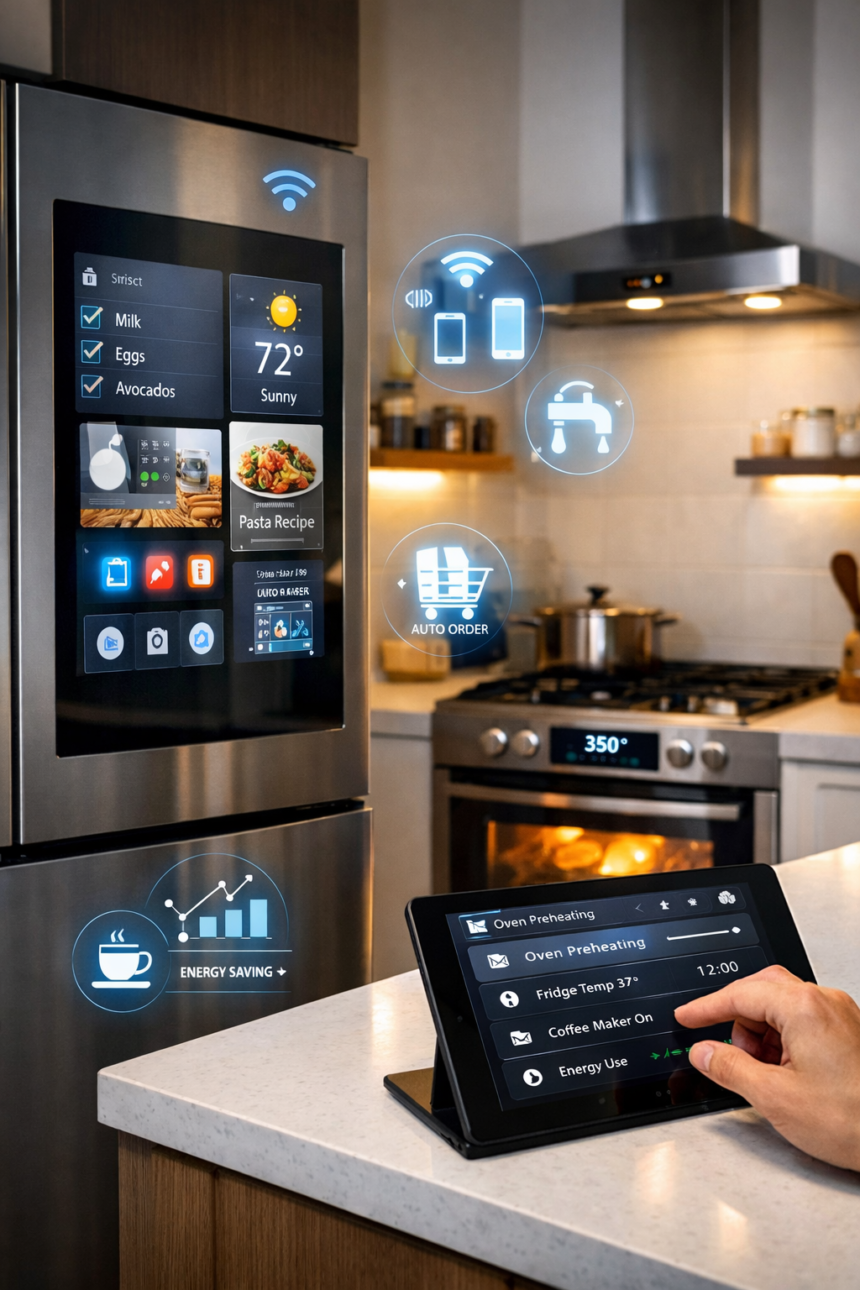
Household IoT is no longer a future concept. It is actively reshaping how American kitchens function, think, and respond. What once felt like optional tech is becoming an expected layer of daily life, embedded into appliances we use without a second thought.
Why the Kitchen Became the Center of the IoT Revolution
No other room produces as much behavioral data as the kitchen. Meals, routines, energy usage, grocery habits, and family schedules all intersect here. For technology companies, that makes the kitchen the most strategic space in the home.
Unlike entertainment devices, kitchen appliances run on repetition. That consistency allows household IoT systems to learn quickly and optimize behavior with minimal user input. Convenience becomes predictable, which is exactly why adoption accelerates.
This shift reflects a broader lifestyle change explored in How smart kitchens are reshaping home life, where automation quietly replaces manual decision-making.
What Household IoT Actually Means in the Kitchen
Household IoT is not about owning a smart fridge. It is about living inside a connected system.
Smart Appliances vs Connected Ecosystems
A smart appliance works independently. A connected kitchen works collaboratively. Refrigerators track inventory, ovens sync with recipe platforms, dishwashers optimize energy cycles, and grocery apps respond automatically.
Once these systems link together, the kitchen stops being reactive and starts becoming predictive.
Automation That Disappears
The most successful household IoT features do not demand attention. They run quietly in the background, adjusting temperatures, managing reorders, and flagging maintenance issues before problems appear.
That invisibility is what turns novelty into habit.
The Brand War Inside Your Kitchen
Appliance brands and tech giants are fighting for ecosystem dominance, not just product sales.
Samsung, LG, Amazon, and Google design kitchens that work best when users stay inside their platforms. Switching brands later becomes costly, not financially, but behaviorally.
This strategy is unpacked in The business race behind connected appliances, where long-term data ownership matters more than short-term margins.
Everyday Benefits That Made Smart Kitchens Go Mainstream
Household IoT did not spread because it looked futuristic. It spread because it removed friction.
Remote preheating saves time. Inventory tracking reduces waste. Energy optimization lowers bills. For families juggling schedules, these small efficiencies stack quickly.
Accessibility also plays a key role. For older adults or people with limited mobility, connected kitchens offer independence without major home renovations.
Privacy Concerns Nobody Reads the Manual For
The convenience of household IoT introduces risks that most users underestimate.
Data Collection and Behavior Tracking
Connected appliances record when you cook, what you eat, and how often you shop. That information holds commercial value. Not all of it stays on your device.
The implications are outlined clearly in Why IoT devices raise new privacy questions, especially when cloud services are required for core features.
Cloud Dependence and Security Risks
If servers fail, smart features vanish. If accounts are compromised, access extends beyond screens into physical spaces. A compromised kitchen is no longer theoretical.
Household IoT requires trust, and not all brands earn it equally.
Social Reactions Show Excitement and Anxiety
On TikTok, smart kitchens are treated with humor. Fridges that “know too much” and ovens that “judge late-night snacks” dominate the tone.
Reddit is more cautious. Users debate whether convenience justifies constant data collection, often sharing mixed experiences.
On X, inevitability dominates the conversation. Many users acknowledge risks but accept that connected living is already normalized.
These reactions mirror the broader tension described in How connected devices are transforming daily life.
Is the Smart Kitchen Too Smart?
A countertrend is emerging. Some households intentionally disable features or avoid connectivity entirely.
This pushback aligns with the mindset behind The Digital Detox Challenge: Unplugging Is the New Glow-Up, where control and intentional living regain importance.
Household IoT is not being rejected. It is being renegotiated.
What the Next 5 Years of Household IoT Looks Like
The next phase will feel less flashy and more adaptive.
Kitchens will anticipate needs instead of responding to commands. Health data will influence food suggestions. Regulations will tighten around data usage. Consumers will demand clearer transparency.
This evolution mirrors automation trends already reshaping work, similar to AI Co-Workers: Embracing Automation in the Workplace.
Household IoT will not disappear. It will mature quietly, until the line between appliance and assistant becomes indistinguishable.
FAQ
What is household IoT?
Household IoT refers to internet-connected devices that automate tasks and collect data inside the home.
How does IoT work in the kitchen?
Smart appliances use sensors, software, and cloud services to communicate and adapt to user behavior.
Are smart kitchen appliances safe?
They can be, but safety depends on updates, strong account security, and transparent data policies.
Is household IoT worth it for families?
For many families, the convenience outweighs the risks, but comfort with data sharing varies.


