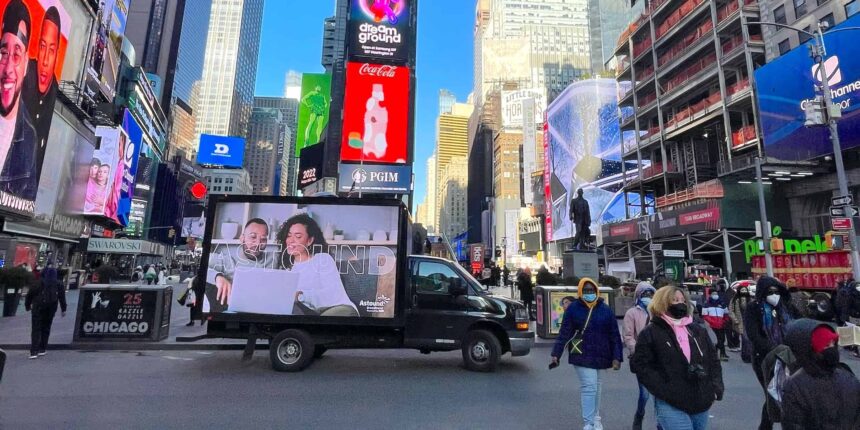
Bluetooth billboards are no longer experimental tech demos hidden in marketing conferences. They are already embedded into daily commutes, quietly transforming how people move through cities and how brands communicate in public space.
What Bluetooth Billboards Really Are
At first glance, a Bluetooth billboard looks like any other roadside or transit ad. The difference is invisible.
These billboards use Bluetooth Low Energy beacons to communicate with nearby smartphones. When a device enters the signal range and permissions are enabled, the billboard can trigger a digital interaction such as a notification, discount, or app prompt.
This evolution fits directly into the broader shift toward mobile-first advertising, similar to what we analyzed in Mobile marketing becoming the future of e-commerce.
Why Advertisers Are Moving Fast on Bluetooth Billboards
Traditional outdoor advertising has always suffered from one weakness: measurement. Brands could estimate impressions, but they could not measure real engagement.
Bluetooth billboards change that equation.
Advertisers can now track interactions such as opens, taps, store visits, or coupon redemptions. According to Forbes’ analysis of interactive advertising trends, brands are increasingly prioritizing formats that link physical exposure to digital action.
For marketers, Bluetooth billboards turn passive visibility into measurable performance.
How the Technology Works in Practice
Bluetooth Low Energy and Proximity Signals
Bluetooth Low Energy beacons continuously broadcast small data packets within a defined radius. When a smartphone detects the signal, it checks whether the device or an installed app is allowed to respond.
If conditions are met, an action is triggered. This could be a message, a location-based reminder, or a time-sensitive offer.
Wired’s reporting on proximity technology explains why BLE is favored: it is energy-efficient, inexpensive, and reliable in crowded urban environments.
Why Context Beats Creativity
Bluetooth billboards live or die on timing.
A coffee discount during the morning commute feels helpful. The same alert late at night feels intrusive. Brands that understand commuter routines and location context see significantly higher engagement.
This is not about louder ads. It is about smarter moments.
How Commuters Actually React
Reactions to Bluetooth billboards reveal a clear pattern: usefulness earns acceptance.
On TikTok, users often share positive surprises. One clip showed a commuter receiving a lunch deal while exiting a metro station, captioned with excitement rather than annoyance.
Reddit discussions tend to be more cautious. Many users ask where the data goes and whether consent is truly informed.
On X, sentiment is split. Convenience is praised. Anything that feels invasive is immediately criticized.
This mirrors broader concerns about digital boundaries in public life, similar to debates raised in Big Brother in the office.
The Psychological Side of Commuter Attention
Commuters operate under constant cognitive load. Notifications compete with navigation, schedules, and stress.
Bluetooth billboards work best when they respect that reality. Short messages. Clear value. No repetition.
When the interaction feels assistive, it blends into the commute. When it feels aggressive, it breaks trust instantly.
Privacy Concerns Cannot Be Ignored
Privacy is the defining challenge of Bluetooth billboard adoption.
The New York Times’ coverage of digital advertising and privacy highlights how consumers are increasingly aware of invisible tracking in everyday environments.
Bluetooth billboards must operate on strict opt-in principles. Transparency and control are no longer optional. Without them, backlash is inevitable.
How Cities and Brands Are Adjusting
Cities are beginning to regulate proximity advertising more carefully. Some require disclosure signage. Others limit data retention or targeting precision.
Brands are responding by focusing on utility-driven campaigns rather than pure promotion. Transit updates, local events, and time-sensitive offers feel less invasive and more welcome.
According to MIT Technology Review’s work on ambient computing, technologies that fade into the background tend to gain acceptance faster than those demanding constant attention.
Are Bluetooth Billboards Actually Effective?
Evidence suggests they are, when executed correctly.
Engagement rates outperform traditional billboards. Conversion depends heavily on relevance and timing. Brand perception improves when interactions feel optional and helpful.
Poorly designed campaigns, however, can damage trust faster than static ads ever could.
Bluetooth billboards are not a shortcut. They are a precision tool.
What the Future Holds for Bluetooth Billboards
Expect fewer notifications, smarter triggers, and tighter privacy controls.
Future deployments will rely more on contextual signals such as time, weather, movement patterns, and commuter habits. As regulations evolve, transparency will become a competitive advantage rather than a constraint.
For commuters, the test will remain simple: does this improve the commute, or interrupt it?
FAQ
What are Bluetooth billboards?
They are physical billboards equipped with Bluetooth beacons that interact with nearby smartphones.
Do Bluetooth billboards collect personal data?
They rely on opt-in signals, but transparency and consent determine how data is handled.
Are Bluetooth billboards effective for brands?
Yes, when messages are relevant, timely, and respectful of privacy.
Will Bluetooth billboards replace traditional outdoor ads?
No. They extend traditional billboards by adding a digital engagement layer.