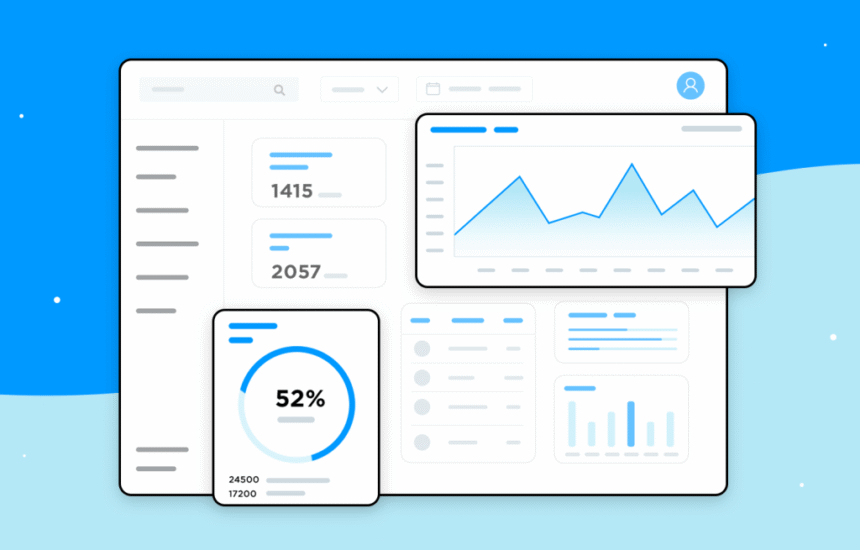
In a world where your clicks, likes and searches form a digital shadow, privacy dashboards are stepping into the limelight.
If you’ve ever wondered exactly what companies know about you — and more importantly how you can see it — welcome to the world of privacy dashboards. These tools promise to shift power from the platforms back to users. The big question: when the U.S. starts piloting them at scale, do they deliver?
What “Privacy Dashboards” Actually Do (and Don’t) 🧭
At their core, privacy dashboards are meant to help you see, manage and potentially delete the data companies hold on you. Think of them as your data control center: what’s collected, who’s looking, what’s being used.
- They provide transparency into data collection.
- They often give toggles to opt out or limit collection.
- They may summarise where your data goes or what it’s used for.
But — they don’t always guarantee true control. Research shows a disparity between visibility and meaningful action. For example, a study of Google My Activity found that while users became more aware and reported less concern after checking their dashboard, only about 25% actually changed any settings. (USENIX)
Likewise, a literature review on dashboards under the General Data Protection Regulation (GDPR) flagged usability and rights-execution gaps. (ResearchGate)
So: transparency yes. But control? That’s the harder part.
Early Signals from U.S. Pilots and Rollouts 📊
What’s happening in the U.S. so far?
- A recent survey from the Pew Research Center found that 73% of Americans believe they have little to no control over what companies do with their data. (Pew Research Center)
- Meanwhile regulatory shifts pile up: according to Gibson Dunn & Crutcher LLP’s 2025 review, states are enacting new privacy laws and agencies are increasing enforcement. (Gibson Dunn)
Why does that matter? Because dashboards don’t exist in a vacuum — they live inside the broader ecosystem of regulation, corporate behaviour and user adoption.
Early wins
- Dashboards increase transparency: users see what’s happening.
- They build trust: when used honestly, they signal companies are serious about data ethics.
- Some companies using dashboards report improved user retention and reduced support friction.
Early warning signs
- Low interaction: many users just glance and move on.
- Complexity: too many toggles, unclear outcomes.
- Visibility without action: you see data collected, but can’t always control it fully.
TikTok user: “Seeing a timeline of when apps hit my mic/cam is wild—finally some receipts.”
Redditor: “Dashboards help, but default settings still bury the real toggles.”
X user: “Give me one place to revoke data sharing across everything—anything less is theater.”
Usability vs Control — Where Users Still Struggle 🧩
Here’s the crux: even when you give users dashboards, the design matters.
User interface & UX
- If the dashboard reads like legalese, users bail.
- If toggles are buried under 3+ clicks, adoption drops.
- If deletion is partial or delayed, trust cracks.
Behavioural inertia
- Users often don’t know what good looks like — so they do nothing.
- Surprise factor: many discover “Oh wow I had 42 trackers this week” and then stick with it.
- Research found that dashboards reduce concern, but do not always lead to action. (ar5iv)
Corporate incentives
- Some companies will build dashboards for appearances, but keep “data monetization” business as usual.
- Without alignment, dashboards become a cosmetic fix rather than a structural shift.
Design Patterns That Build Trust (and the Ones That Break It) 🛠️
If you’re rolling out or assessing a privacy dashboard, here are what to watch for.
Trust-builders
- Clear, plain-language explanation of what data is collected and why.
- Real-time or near-real-time updates (“Last time your location was accessed”).
- One-click controls: revoke, pause, delete.
- Visual summaries: charts, logs, dashboards you can scan quickly.
- Transparent business model: show what data sharing means, not just that it’s “on/off”.
Pitfalls
- “Dark patterns” that bury opt-outs or default to full collection.
- Complexity overload: users abandon tools written for data scientists.
- Empty promises: visibility without real control.
- Lack of multi-platform integration: you toggle on mobile but not desktop, etc.
As one design standard reminded us, minimal data collection is still the most powerful privacy control.
What’s Next — Interoperability, On-Device AI, and Policy Heat 🔮
Looking ahead, these are the major trajectories for privacy dashboards:
- On-Device Intelligence: The shift from cloud to device means less data leaves your phone, reducing the risks and simplifying the dashboard scope.
- Interoperability: Dashboards will need to connect across apps, platforms, browsers — you’ll expect one pane of glass for all your data visibility.
- Stronger Regulation: With laws tightening, dashboards may become required for compliance and accountability, not optional features.
- AI Monitoring & Alerts: Dashboards may evolve to proactively alert you (“Your sleep tracker shared with 5-third-parties overnight”) rather than just showing logs.
Bottom Line
Privacy dashboards aren’t a silver bullet — but they are a pivotal piece in the evolving digital-privacy puzzle. On the one hand they provide clarity; on the other, they force us to ask whether visibility means power. Early testing in America shows promise, but the real measure will be if users feel in control, not just informed.
So next time you ask, “What do they know about me?” — ask also, “Can I make them stop knowing?” Because the true value of a privacy dashboard lies not just in the data you see, but in the control you take.
FAQ
What are Privacy Dashboards?
Privacy dashboards are tools that let you view, manage and sometimes delete the data that platforms or services collect about you.
How do Privacy Dashboards work?
They provide a user interface showing what data is collected (e.g., location, cookies, activity), how it’s used, and often allow toggles for review, deletion or pausing of collection.
Are Privacy Dashboards effective?
Early insights show they boost transparency and trust, but effectiveness varies — users often see data but may not act to control it unless the UI is optimized.
Why are Privacy Dashboards important in America?
As U.S. state and federal privacy laws accelerate, dashboards become a key mechanism for companies to meet accountability requirements and for users to assert their rights.
What’s the future of Privacy Dashboards?
Expect broader integration (cross-app, cross-device), on-device controls, and more proactive features (alerts, AI-based insights) as part of evolving digital-privacy frameworks.