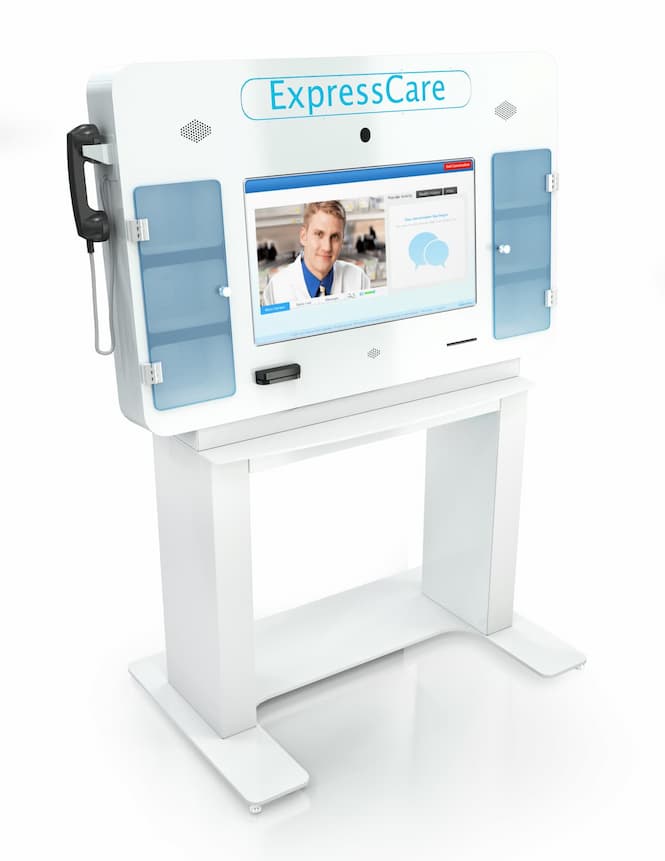
Telehealth kiosks are stepping into the spotlight as America searches for faster, more accessible ways to deliver healthcare. They’re popping up in pharmacies, grocery stores, workplaces, and community centers, offering a futuristic alternative to traditional clinic visits. And early data from pilot programs across the U.S. shows a fascinating mix of promise, innovation, and very real hurdles.
What Telehealth Kiosks Are and How They Work 🚀
Telehealth kiosks are compact, high-tech mini-clinics equipped with screens, cameras, and connected medical devices. They allow patients to consult remotely with licensed healthcare providers and run basic diagnostics right on the spot.
Inside a standard telehealth kiosk, you’ll typically find:
- A high-resolution video conferencing system
- A blood pressure cuff
- A thermometer
- A pulse oximeter
- A stethoscope attachment
- Sanitized waiting area lighting
- Privacy-controlled soundproofing
According to NYTimes, healthcare providers see kiosks as a way to reach patients who live far from clinics or struggle to book timely appointments.
A Reddit user captured the vibe well:
“Finally, healthcare meets you where you are. About time.”
Why They’re Appearing Everywhere
Three forces are pushing telehealth kiosks into the mainstream:
- The rise of telemedicine
- Limited healthcare access in rural communities
- National demand for faster, more convenient medical care
These kiosks bridge the gap between full clinic visits and quick virtual consults by adding diagnostic tools you can’t use from your phone.
Early Data: What Telehealth Kiosks Improve 🏥
Early testing across the U.S. shows strong benefits. Patients using kiosks report:
- Shorter wait times
- Easier access to urgent consultations
- High satisfaction with convenience
- Better follow-through on appointments
- More immediate care for minor issues
Pew Research found that public comfort with telemedicine has surged, especially among younger adults and rural populations. Kiosks take that comfort one step further by giving people a physical space with built-in medical devices.
Patient satisfaction ratings also remain high, especially for:
- Cold and flu consults
- Medication refills
- Dermatology checks
- Mental health support
- Chronic disease monitoring
One TikTok comment summed up the excitement:
“These kiosks are a game-changer for rural areas. No more 45-minute drives!”
Devices Inside a Telehealth Kiosk
Patients can perform diagnostic checks under guidance from a remote clinician:
- Check vitals
- Capture high-quality images
- Receive immediate medical advice
- Get prescriptions electronically
By combining virtual care with real tools, kiosks offer a hybrid that home telehealth can’t match.
Real Reactions From Patients and Healthcare Workers 💬
Patients appreciate the convenience, but reaction isn’t uniform. While some are thrilled, others express caution.
Public Reactions
TikTok:
“I used one at CVS, and it was shockingly easy.”
Reddit:
“Makes healthcare so much simpler, especially when my doctor is booked for two weeks.”
X (formerly Twitter):
“Love the tech, but privacy? That’s a huge question mark for me.”
Healthcare Worker Reactions
Doctors and nurses see potential but warn of challenges:
- Quality depends on training and device maintenance
- Rural bandwidth issues can interrupt consults
- Some medical conditions require in-person care
Still, most clinicians agree kiosks can offload basic consults, freeing up in-person clinics for more complex cases.
Challenges and Roadblocks 🚧
Telehealth kiosks offer convenience, but implementation is far from smooth.
Connectivity Problems
Even the best kiosk can’t operate with unstable internet. Rural regions especially face bandwidth limitations that interrupt calls and data transfers.
Privacy Concerns
Public kiosks raise questions around:
- Who sees the data
- How data is stored
- What happens if systems are breached
Wired reports that digital health tools must clear higher security standards before widespread adoption.
Infrastructure Issues
Kiosks must be:
- Cleaned frequently
- Maintained regularly
- Updated digitally
- Staffed with on-site support
Not all communities have resources to manage that.
Integration With Healthcare Systems
Doctors need patient data to sync with existing systems. If kiosks can’t integrate smoothly with electronic health records, information gaps emerge.
These issues don’t erase the benefits but highlight the work ahead.
The Bigger Picture: Telehealth Kiosks in U.S. Healthcare
Telehealth kiosks sit at the intersection of convenience and technology. They’re an extension of the broader telemedicine boom that accelerated during the pandemic.
To see how automation changes the workforce, explore our article on AI Co-Workers: Embracing Automation in the Workplace. It mirrors the same shift happening in healthcare: replacing friction with smart tools.
And in the bigger digital transformation picture, our piece on The Future of Remote Work shows how consumers are becoming more comfortable with remote-first interactions across different parts of life.
Impact on Rural America
Rural residents often travel long distances just to speak with a doctor. Kiosks eliminate that burden, providing easier access to:
- Routine check-ups
- Chronic disease management
- Urgent consultations
- Mental health support
The effect on health outcomes could be significant.
Impact on Workplaces and Cities
Some employers now install telehealth kiosks on-site so workers can get care during breaks. Cities are piloting kiosks in public libraries and transit hubs.
Telehealth isn’t just becoming more accessible. It’s becoming more ambient.
The Future of Telehealth Kiosks 🔮
As digital health evolves, next-gen kiosks will include:
- AI-driven preliminary diagnostics
- Full integration with pharmacy networks
- Multilingual interfaces
- Biometric identity verification
- Wearable syncing
- Expanded screening tools
Forbes predicts telehealth tech will soon expand into smart home devices, wellness apps, and retail health hubs.
What Needs to Happen for Kiosks to Scale
- Affordable hardware
- Stronger cybersecurity
- Better broadband in rural areas
- Standard patient data protocols
- Clear laws around telemedicine
- Public education on how kiosks work
If cities and healthcare systems meet these goals, kiosks could become as common as ATMs.
FAQ: Telehealth Kiosks Uncovered
What are telehealth kiosks?
They’re mini-clinics equipped with medical tools and video systems that let patients consult with healthcare providers remotely.
How do telehealth kiosks benefit patients?
They provide quick, accessible care without the need for a traditional in-person visit, especially for people in rural or underserved areas.
Are telehealth kiosks secure?
They use encrypted systems, but security and privacy remain major public concerns as adoption grows.
What is the future of telehealth kiosks?
They’re expected to expand nationwide with better devices, AI integration, and smoother healthcare system connectivity.
How do kiosks fit into digital health trends?
They’re part of a larger shift toward tech-powered healthcare, offering more flexible ways for people to access medical care.