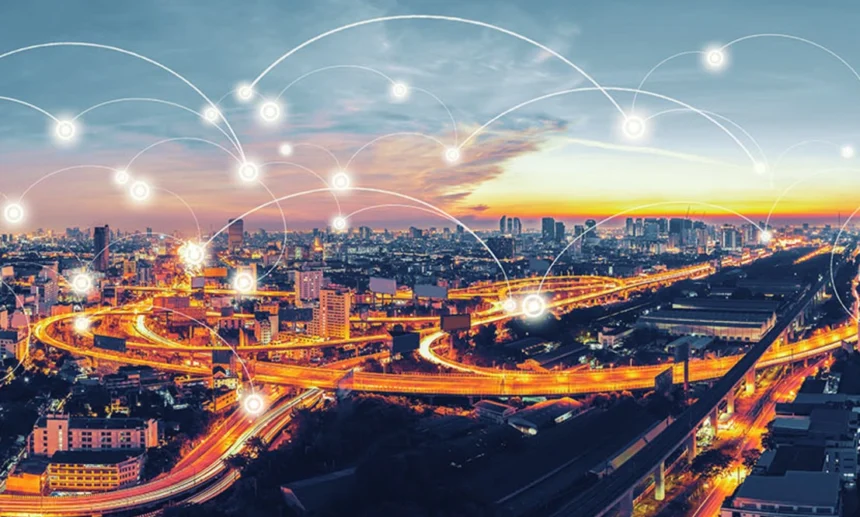
Citywide Wi-Fi is no longer a futuristic concept. Across the United States, major cities are quietly activating free, seamless wireless networks that blanket entire urban areas. The early results? Promising, ambitious, and packed with lessons about what a hyper-connected society could look like.
What Is Citywide Wi-Fi and How It Works 📶
Citywide Wi-Fi is a network that allows anyone in a city to connect to the internet for free, simply by being within reach of municipal access points. These networks turn streetlights, utility poles, transit hubs, and public buildings into broadcast towers for public connectivity.
Access points are connected through a mesh system, creating overlapping zones of coverage so users stay connected even while walking across neighborhoods.
A Reddit user put it plainly:
“Finally, free internet everywhere. But is it safe? That’s what worries me.”
That question is exactly why understanding the system matters.
The Tech Behind Urban Wi-Fi Networks
Citywide systems typically rely on:
- Mesh Wi-Fi architecture
- Hundreds (sometimes thousands) of access points
- Integration with fiber backbones
- Alignment with 5G networks for speed boosts
Our article on the 5G Revolution explains how 5G strengthens these networks by reducing latency, improving throughput, and supporting higher user density.
Together, these layers form the backbone of modern municipal connectivity.
Why Citywide Wi-Fi Matters: Benefits & Challenges 🎯
When cities flip the switch on municipal Wi-Fi, three major benefits appear almost immediately.
Universal Access
Public Wi-Fi democratizes internet access for residents, giving underserved communities the same connectivity enjoyed by wealthier districts. In an era where internet access shapes educational and career opportunities, this matters deeply.
Pew Research highlights that nearly one in four low-income Americans still lack reliable home broadband. Citywide Wi-Fi helps close that gap.
Economic Boost
Free connectivity attracts foot traffic to small businesses and fuels digital entrepreneurship. Pop-up shops, freelancers, remote workers, and shoppers all benefit from stable access.
Smart City Development
Citywide Wi-Fi enables connected systems, including:
- Transit monitoring
- Smart parking
- Public safety cameras
- IoT sensors
- Emergency alert networks
These technologies work best when cities have robust wireless coverage.
But citywide networks aren’t perfect.
The Biggest Challenges
- Security risks: Public networks can be easier targets for cyberattacks.
- Infrastructure cost: Cities must invest heavily in hardware and maintenance.
- Data privacy concerns: Who stores the connection data? How is it used?
Forbes reports that cyber threats remain the biggest barrier preventing full adoption.
Still, early tests show benefits outweigh the obstacles when cities use strong security protocols and transparent privacy policies.
Real-World Wi-Fi Success Stories 🌍
Citywide Wi-Fi is already making an impact in some of America’s largest metro areas.
New York City
NYC’s public Wi-Fi systems—reported on by NYTimes—have become a lifeline for students, gig workers, and tourists. Coverage expands every year, with thousands of hotspots across parks, streets, and transit stations.
San Francisco
San Francisco runs one of the most successful citywide networks in the U.S., offering free Wi-Fi in public libraries, parks, and high-traffic community centers. It has been particularly effective for low-income neighborhoods.
Smaller Cities
Mid-size cities like Chattanooga, Austin, and Kansas City use citywide Wi-Fi to power smart city initiatives including traffic optimization, water system monitoring, and city service automation.
One X user captured the vibe perfectly:
“Give me citywide Wi-Fi already. I’m tired of babysitting my data plan.”
Cultural Impact: What Citywide Wi-Fi Means for Daily Life 🎨
Citywide Wi-Fi is transforming the way people interact with their environments.
More Inclusive City Life
People who were once disconnected are now plugged into digital resources, job listings, virtual classrooms, and telemedicine services.
New Outdoor Work Culture
More people now work in parks, community plazas, and outdoor coworking zones. With public Wi-Fi, “third places” (spaces outside home and work) are becoming digital hubs.
Creative Collaboration
Artists, musicians, and creators use public Wi-Fi to upload videos, live-stream performances, and collaborate with local communities.
A TikTok creator posted:
“Citywide Wi-Fi is the real tech revolution. We outside AND online.”
How Citywide Wi-Fi Fuels Smart City Innovation
Citywide Wi-Fi is the foundation for smart city architecture. With fast and stable public internet, cities can deploy systems that improve safety, sustainability, and transportation.
Examples of Smart City Integrations
- Real-time bus tracking
- Adaptive traffic lights
- Flood detection sensors
- Air quality monitoring
- Citywide emergency alerts
- Waste collection automation
These systems depend on a persistent wireless backbone.
Wired reports that IoT expansion is directly tied to municipal Wi-Fi growth.
The Economics of Going Wireless
Cities invest heavily in citywide Wi-Fi—millions of dollars, in some cases. But the long-term benefits often justify the cost.
How Cities Save Money
- Fewer physical kiosks
- Lower wired infrastructure requirements
- Consolidation of communication systems
- Faster outage detection
- Reduced maintenance costs via IoT automation
Smart cities typically see ROI through operational efficiency and reduced physical infrastructure upkeep.
The Future of Citywide Wi-Fi in America 📈
The speed at which citywide Wi-Fi is expanding suggests a future where free public connectivity becomes a standard amenity—just like streetlights or sidewalks.
What’s Coming Next
- Faster citywide 5G-powered Wi-Fi
- Encrypted public access by default
- Solar-powered access points
- Wider networks in rural towns
- Expansion to airports, malls, schools, and stadiums
And as AI-driven automation rises, citywide Wi-Fi becomes essential infrastructure. For a closer look at how automation affects workplaces, check out our article on AI Co-Workers.
Citywide connectivity will also support robotics, drones, and autonomous vehicles, similar to the systems described in The Evolution of Warehouse Bots.
Where Public Opinion Stands
Americans overwhelmingly support free Wi-Fi access in public spaces. Concerns focus less on the idea itself and more on privacy, data handling, and cyber protections.
FAQ
How does citywide Wi-Fi work?
It uses hundreds of interconnected access points to provide seamless coverage across large urban areas.
What are the benefits of citywide Wi-Fi?
Universal internet access, economic growth, improved digital equity, and support for smart city systems.
Are there security concerns with citywide Wi-Fi?
Yes. Public networks are more vulnerable, so users should rely on VPNs and cities must deploy strong encryption and monitoring tools.
Which U.S. cities offer citywide Wi-Fi?
New York City and San Francisco lead the way, with growing networks in Austin, Chattanooga, and parts of Los Angeles.