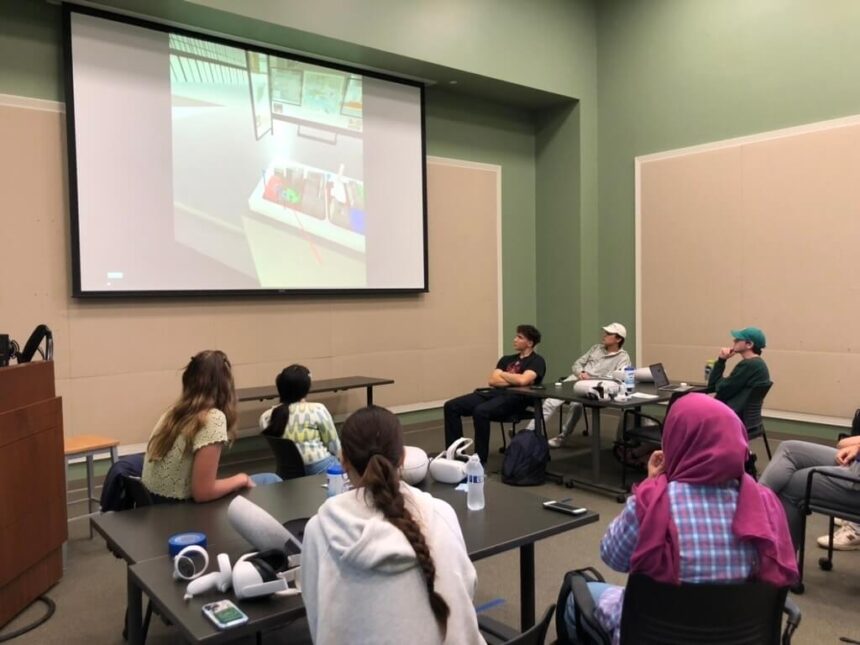
XR classrooms are no longer sci-fi fantasies. Across the U.S., early pilot programs are proving just how transformative Extended Reality can be for learning. Students are stepping inside historical worlds, manipulating 3D molecules, and exploring faraway ecosystems without ever leaving their desks.
What Is XR and Why Classrooms Love It 🔍
XR, or Extended Reality, covers Virtual Reality, Augmented Reality, and Mixed Reality. Together, they blend digital environments with the physical world, turning passive lessons into hands-on experiences.
According to NYTimes, early adopters in U.S. schools say XR is unlocking deeper engagement and making even difficult subjects feel intuitive.
A Reddit user summed it up well:
“It’s like Hogwarts for tech. Every lesson feels magical.”
Why XR Hits Different in Education
- Students learn by doing rather than memorizing
- Complex STEM concepts become visual
- Immersive environments boost retention
- Abstract ideas become concrete
XR doesn’t just help students understand material. It helps them feel it.
Early Data: XR’s Impact in the Classroom 📊
The first wave of American XR classrooms pilots is showing significant gains in:
- Student focus
- Participation
- Memory recall
- Concept comprehension
Forbes reports that immersive learning triggers the same cognitive mechanisms we use in real-world exploration, making lessons more intuitive and lasting.
But it’s not all frictionless. Schools are running into predictable challenges:
- Cost of hardware
- Teacher training
- Network bandwidth
- IT support limitations
Still, the enthusiasm among educators is undeniable. Teachers say XR reaches students who typically struggle with traditional instruction.
Where XR Works Best
- History: walking through ancient civilizations
- Biology: manipulating 3D cells and organs
- Chemistry: interacting with molecules
- Language learning: stepping into foreign environments
- Arts: sculpting or painting in virtual studios
A TikTok creator joked:
“If my school had XR, I might’ve actually passed calculus.”
Real Reactions From Teachers and Students 💬
Educators report that XR has become an instant student magnet. Even shy students engage more when learning feels like exploration rather than memorization.
A TikTok comment captured the sentiment:
“I wish we had XR back in my day. History class would’ve been EPIC.”
Students call XR “fun,” “engaging,” and “the future.” Teachers appreciate how XR brings abstract topics to life.
Meanwhile, an X user pointed out a practical gap:
“XR is incredible, but can we please hire more IT staff for schools?”
How Classroom Dynamics Change
- More collaboration
- Higher energy
- Less boredom
- Better focus
- More interactive discussion
XR shifts classrooms from teacher-centered to student-driven learning.
Teachers, Tools, and the Human Factor 🎓
Despite XR’s high-tech nature, educators remain the heart of the experience. XR enhances their teaching rather than replacing it.
Teachers say XR helps them:
- Break down complex ideas
- Visualize lessons
- Keep students engaged
- Offer differentiated instruction
But they need strong support systems. Hardware maintenance, device updates, and lesson integration require time and coordination.
Barriers Schools Still Face
- Classroom Wi-Fi strain
- Insufficient teacher training
- Lack of age-appropriate XR curriculum
- Motion sickness for some students
- Device wear and tear
These hurdles are solvable as XR becomes more affordable and widespread.
Industries Fueling the XR Education Boom 🚀
The XR movement in schools is powered by the same industries revolutionizing gaming, manufacturing, and remote work.
Wired notes that mixed reality research from companies like Meta, HTC, and Apple is quickly filtering into education. As hardware becomes lighter, cheaper, and more powerful, schools gain access to tech that once belonged only to enterprise labs.
XR is also benefiting from advances in:
- 5G connectivity
- AI-powered perception
- Wearable computing
- Cloud rendering
- Real-time simulation engines
How Industry Collaboration Helps Schools
Tech companies partner with districts to run XR pilots that:
- Train teachers
- Provide hardware
- Develop curriculum modules
- Measure learning outcomes
This collaboration accelerates adoption while reducing costs.
The Future of XR Classrooms in America 🔮
As XR hardware improves, the next generation of classrooms will feel like hybrid worlds where digital and physical seamlessly mix.
Future possibilities include:
- Full virtual field trips
- Global XR collaborations with students worldwide
- AI-driven learning assistants
- Real-time object scanning
- XR content creation as a core skill
Pew Research shows growing public acceptance of immersive tech in education, especially among younger parents and digital-native students.
Democratizing Access
XR may help level the playing field for:
- Rural schools
- Special education programs
- Underfunded districts
- Home-schooled learners
Immersive learning doesn’t care if your school can’t afford a full lab. XR creates one for you.
Where XR Fits Into the Larger Tech Story
XR classrooms aren’t happening in isolation. They’re part of a wider automation wave. To see how these shifts echo across workplaces, explore our piece on AI Co-Workers Embracing Automation. And if you want a preview of how physical robotics merges with these systems, our article on The Evolution of Warehouse Bots offers a similar trajectory.
Just like automation and robotics before it, XR is becoming a core pillar of American innovation.
FAQ
What is XR in education?
XR stands for Extended Reality, which includes VR, AR, and MR. It blends digital and physical environments to create immersive learning.
How is XR different from VR?
VR is fully immersive, while XR includes VR, AR overlays, and MR interactions that blend digital elements with real-world environments.
What are the benefits of XR classrooms?
Higher engagement, better retention, interactive STEM learning, and immersive exploration of complex topics.
What challenges do schools face?
Hardware costs, tech support needs, teacher training, and infrastructure requirements.