


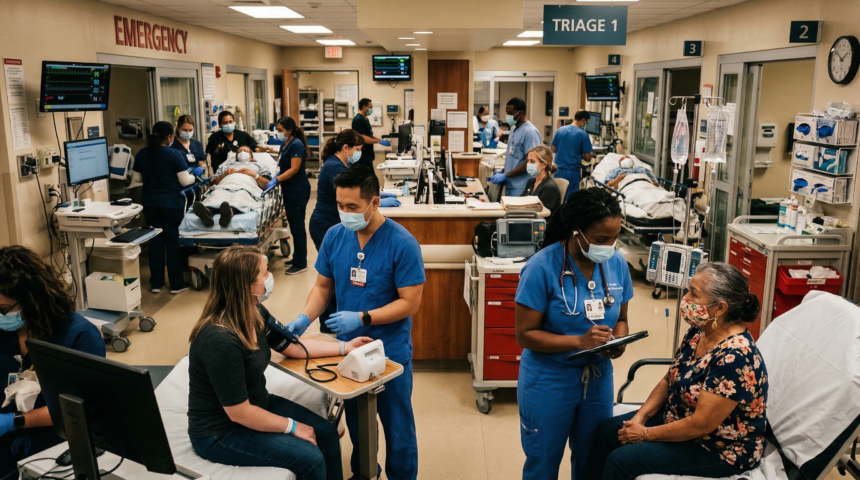
California's bustling healthcare landscape presents a constant challenge: efficiently managing patient flow, especially in emergency departments. With diverse populations and varied hospital resources, robust patient triage systems are absolutely critical.
Understanding the nuances of various California hospital triage protocols is essential for optimizing care, ensuring equitable access, and safeguarding patient outcomes.
Comparing 5 Key California Hospital Triage Protocols: What Works Best?
The initial patient assessment upon hospital arrival, known as triage, is a cornerstone of emergency medicine. It determines the urgency of a patient's condition, dictating the speed and level of medical attention they receive.
For California hospitals, selecting the right triage system significantly impacts operational efficiency, resource allocation, and patient safety. This decision evolves with patient demographics, technological advancements, and the threat of mass casualty incidents.
The Imperative of Effective Triage in California
California's unique geography and population density demand exceptional preparedness from its healthcare infrastructure. From high-volume urban emergency departments to rural hospitals, the need for standardized yet adaptable California hospital triage protocols is paramount.
These protocols act as gatekeepers, ensuring critically ill patients are prioritized. They also streamline care for less urgent cases to prevent bottlenecks and improve the overall patient experience. The consequences of ineffective triage range from long wait times to adverse clinical outcomes.
Healthcare leaders continually evaluate which systems best align with their operational needs. The goal is a delicate balance: providing rapid, accurate assessment without over-or under-triaging, thereby optimizing resources and patient care.
Core Triage Systems: The Foundation of California Hospital Triage Protocols
Hospitals across the state employ several well-established triage systems. While some are designed for daily operations, others are tailored for mass casualty events. Understanding their mechanics is crucial for appreciating their suitability in varied settings.
1. Emergency Severity Index (ESI)
The ESI is the most widely adopted five-level triage system in the United States, including many California hospitals. It's a robust tool that categorizes patients based on both acuity and anticipated resource needs.
Triage nurses assess immediate life threats, potential deterioration, and the number of resources—labs, imaging, consultations—a patient will likely require. This dual approach helps manage patient flow by identifying who needs immediate intervention versus who can safely wait. For instance, a patient with chest pain might be ESI level 3, while someone with a minor laceration could be ESI level 5.
2. Canadian Triage and Acuity Scale (CTAS)
While more prevalent in Canada, CTAS is another five-level system used in some California facilities. Similar to ESI, CTAS categorizes patients based on urgency and the ideal time to be seen by a physician.
It emphasizes the presenting complaint, vital signs, and clinical modifiers to assign an acuity level with clear benchmarks (e.g., Level 1: immediate). The system promotes clear communication among providers regarding patient priorities.
3. Manchester Triage System (MTS)
The MTS is a global leader that uses a flowchart-based algorithm to assess patients. It employs "discriminators"—key clinical features—that guide the nurse through a series of questions to assign one of five urgency categories. This systematic approach helps reduce variability in triage decisions, making it a reliable component of many California hospital triage protocols.
4. Disaster Triage (START/JumpSTART)
In a state prone to earthquakes and wildfires, robust disaster triage protocols are indispensable. The Simple Triage and Rapid Treatment (START) method is the most common adult mass casualty triage system.
Patients are categorized into four groups (Immediate, Delayed, Minor, Deceased) based on their ability to walk, respiratory effort, perfusion, and mental status (RPM). JumpSTART is its pediatric counterpart. These systems prioritize the greatest good for the greatest number, a critical element of comprehensive disaster preparedness for hospitals.
5. California-Specific Adaptations and Innovations
Many California hospitals adapt standard systems to better suit their unique patient populations. This might involve integrating electronic health records (EHR) with triage algorithms, developing protocols for vulnerable populations, or piloting AI-powered tools. These local adaptations are a key feature of evolving California hospital triage protocols.
Triage in Action Across California
The choice of system profoundly impacts daily hospital operations. A large Los Angeles medical center might rely on ESI for its high volume, allowing for rapid identification of high-acuity patients while routing others to fast-track areas. This strategy is crucial for preventing ED overcrowding.
In contrast, a rural Northern California hospital might use a streamlined CTAS or modified ESI. Their focus is on precise initial assessment to facilitate timely transfers for specialized care. Accurate initial triage is critical when specialist availability is limited.
During a mass casualty incident, like a wildfire, the paradigm shifts entirely. Hospitals activate disaster plans, deploying START and JumpSTART protocols. This crucial shift in California hospital triage protocols emphasizes resource optimization under extreme duress.
Analyzing the Impact: Effectiveness, Efficiency, and Equity
Evaluating the "best" triage system depends on context and objectives. Each system presents advantages and challenges.
Effectiveness
ESI and CTAS are highly effective in categorizing acute conditions. Their structured nature helps reduce mortality by ensuring critical patients are seen first. However, their effectiveness hinges on consistent training. A Health Affairs study on triage effectiveness highlights how standardized systems can improve outcomes. Disaster triage systems like START are effective because they are designed for speed, maximizing survival rates in chaotic situations.
Efficiency
Triage systems improve efficiency by reducing ED wait times and optimizing resources. ESI, with its focus on resource needs, directly informs patient placement. This proactive approach helps with emergency department management. The simplicity of START is its greatest efficiency asset during disasters, allowing rapid assessment of hundreds of victims. The integration of modern healthcare technology trends, like electronic triage tools, further enhances this.
Equity
Health equity is a critical consideration for any triage system in diverse California. While designed to be objective, implicit biases can influence a nurse's assessment.
Factors like language barriers or cultural differences in pain expression can lead to under-triaging certain populations. Regular cultural competency training is vital to uphold core California healthcare standards. The goal of any of the California hospital triage protocols is to ensure medical need, not demographics, drives priority.
Practical Takeaways for Optimizing Triage
For hospital leaders, the journey to optimized triage is continuous.
- Contextual Selection: The "best" system aligns with a hospital's patient volume, case mix, and staffing. No single solution fits all.
- Robust Training: Consistent, ongoing training for all triage staff is non-negotiable. This includes certification, refreshers, and competency assessments.
- Technology Integration: Leveraging EHRs and digital tools streamlines triage, reduces errors, and provides valuable data.
- Continuous Quality Improvement (CQI): Regular audits of triage decisions and analysis of patient outcomes are crucial for adapting and improving local California hospital triage protocols.
- Disaster Preparedness: Hospitals must integrate START/JumpSTART training into regular emergency drills. This dual capability ensures resilience in both routine and crisis situations.
The Future of California Hospital Triage Protocols
The evolution of these systems is far from over. Future trends point toward greater technology integration and predictive capabilities. Artificial intelligence (AI) is emerging as a powerful tool that could revolutionize triage by analyzing patient data in real-time to suggest an acuity level, reducing human error.
Tele-triage, where initial assessment occurs remotely, is another promising area for managing non-urgent cases. As healthcare systems become more interconnected, the standardization of California hospital triage protocols across regions could enhance patient transfers and ensure seamless care.
A Commitment to Exceptional Patient Care
Effective patient triage is the unsung hero of efficient healthcare in California. By understanding systems like ESI, CTAS, and START/JumpSTART, hospitals can make informed decisions that optimize patient flow, safeguard resources, and save lives.
The ongoing commitment to training, technology, and quality improvement is paramount. As California navigates its complex healthcare challenges, the strategic refinement of its hospital triage protocols will remain a cornerstone of its commitment to exceptional patient care.
Frequently Asked Questions (FAQ)
Q1: What is the primary purpose of a patient triage system in California hospitals?
A1: Its main purpose is to rapidly assess patients upon arrival to determine the urgency of their condition. This prioritizes them for medical attention based on acuity, ensuring the most critical patients are seen first while managing overall patient flow.
Q2: How do daily emergency department triage systems differ from disaster triage systems?
A2: Daily ED triage systems (like ESI) focus on the best outcome for each individual patient. Disaster triage systems (like START) are used in mass casualty events to do the greatest good for the greatest number of people, maximizing survival with limited resources.
Q3: Which triage system is most commonly used in California hospitals?
A3: The Emergency Severity Index (ESI) is widely adopted in California. Its five-level classification considers both clinical acuity and anticipated resource needs, making it effective for managing diverse patient populations in busy emergency departments.
Q4: What role does technology play in modern California hospital triage protocols?
A4: Technology is vital. It integrates with Electronic Health Records (EHRs) to streamline documentation, provides real-time data for managing patient flow, and enables predictive analytics. Future tools include AI for more accurate and rapid assessments.

