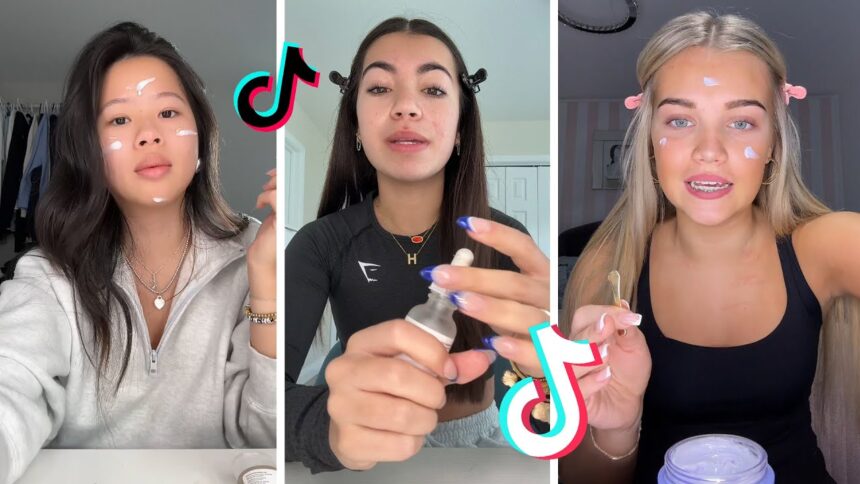
Polish is out; presence is in. TikTok’s next era swaps flawless routines for messy, meaningful moments—and viewers are rewarding the shift.
From Polished to Personal — How GRWM Set the Stage
Before we talk about Authenticity 3.0, we have to give GRWM its flowers. The format made the camera feel like a friend: you got dressed, told a story, and invited people into your bathroom mirror. If you want the short origin story, this GRWM origin and definition primer explains how “Get Ready With Me” became the go-to for cozy, confessional content. More importantly, it established a trust contract: I’ll show you the process, not just the result.
That contract worked because it felt soothing. Vogue captured it well with a look at why GRWM feels comforting and intimate—a low-pressure parasocial ritual you could join while brushing your teeth. But rituals calcify. Once the beats are predictable, viewers start hunting for what the beats left out. That itch—“okay, but what’s really going on?”—is the runway for Authenticity 3.0.
Authenticity 3.0 — What “Get Real With Me” Actually Adds
So what’s new about Authenticity 3.0 beyond a cheeky rename? Two things: stakes and receipts. “Get Real With Me” turns the camera on the parts we used to crop out—budget anxiety, skin flare-ups, career plateaus, messy rooms no algorithm would feature on a real estate tour. It’s not anti-aesthetic; it’s anti-pretense. That’s why it pairs naturally with de-influencing. WIRED’s piece on de-influencing and the anti-haul backlash shows how users are voting with their watch time for people who tell the truth, even when the truth isn’t brand-safe.
The result is a new baseline: Authenticity 3.0 doesn’t just show the “before”; it narrates the in-between. It’s the difference between “here’s the serum I love” and “here’s why my skin freaked out and how I’m recalibrating.” It’s also the difference between a vibe and a value: the clip is useful because it’s candid.
Signals of Real — Aesthetics That Read as Honest
If the first era optimized for glow, Authenticity 3.0 optimizes for signal. Creators are using low-contrast lighting, single-mic audio, jumpy edits that keep the imperfect sentence, and eye-contact that lingers a second too long. The audience reads these as honest not because they’re sloppy, but because they feel unguarded. A prime example is the “crying-core” wave—explored in our breakdown of how the crying makeup trend shows vulnerability aesthetics. The point isn’t to glamorize tears; it’s to prove that the clip isn’t afraid of them.
Other authenticity signals: unfiltered time stamps (“posted at 2:17 a.m. because I couldn’t sleep”), tiny jump cuts that keep the stutter, and receipts—screenshots, calendars, unread email piles. Authenticity 3.0 rewards the texture of real.
When “Real” Turns Performative — The Trendbait Trap
Of course, as soon as “real” starts trending, someone manufactures it. Viewers can smell that, too. Vox’s explainer on how TikTok is full of made-up slang and trendbait is basically a caution sign for Authenticity 3.0: if you script a meltdown and call it candid, you’ll get views once—and exits forever. The fix isn’t going back to polish; it’s adding context. Why are you showing this? What changed because you posted it? Authenticity 3.0 content earns trust when it answers those questions on camera.
Parasocial, But Healthier? Celebrity “Get Real With Me”
Even celebrities are recalibrating. The manicured “day in my life” is giving way to car-seat monologues and late-night “I messed up today” confessionals. That’s especially visible in parenting clips, where less curated, more candid posts resonate because they flatten the pedestal. Our deep-dive on how celebrity moms are driving a candid era on TikTok shows why vulnerability scales: when fame drops the performance, relatability spikes. Authenticity 3.0 thrives on that paradox—less polish, more impact.
“GRWM was cute, but ‘Get Real With Me’ is why I stopped skipping.” — a TikTok user
“Less haul, more honesty. Tell me what didn’t work.” — a Redditor
“Authenticity 3.0 = unfiltered energy with actual context.” — an X user
The Business Case: Why Brands Should Care
For brands, Authenticity 3.0 isn’t a risk; it’s a filter. If a product can’t survive a “get real” demo, the problem is the product. Buyers are calibrating toward creators who show misfires and fixes, not just unboxings. That means the best branded content in this era looks like a field test, not a sizzle reel. Expect to see side-by-side clips (“this SPF on a humid commute vs. in-office”), budget talk (“I bought this with my own money”), and follow-ups a week later with corrections. In Authenticity 3.0, integrity is the algorithm.
What Viewers Want (But Rarely Say Out Loud)
Under the hood, Authenticity 3.0 operates on a simple equation: candor × competence. Viewers will forgive rough lighting if you’re specific, and they’ll forgive a stumble if you circle back with what you learned. What they won’t forgive is the bait-and-switch—promising “real talk” and delivering platitudes. That’s why the best “Get Real With Me” clips land in the comments with resources, links, and timestamps. The audience wants receipts, not recipes.
Creator Playbook — How to Do Authenticity 3.0 Without Faking It
Here’s a practical blueprint you can film tonight:
- Start mid-problem. Open with the sentence you’re nervous to say: “I’ve been breaking out for two weeks.” It signals Authenticity 3.0 immediately.
- Switch the lens from “me” to “we.” Offer a hypothesis and a test plan; invite viewers to try it and report back.
- Keep one flaw on purpose. The goal isn’t mess; it’s proof. A retained stutter, a visible to-do list—small imperfections that read as human.
- Use receipts, not rants. Screen-record the setting you changed, the ingredient label you misread, the calendar that forced the shortcut.
- Make a 72-hour follow-up. Authenticity 3.0 favors arcs. Promise the check-in and deliver it.
- Tag the stakes. Say why this matters to you (confidence, budget, time). Stakes are the glue for attention.
- Caption for context, not clickbait. “Get Real With Me: fixing the SPF pilling” beats “you won’t believe…” every time.
- Protect your boundaries. Real doesn’t mean raw-nerve forever. Share what you can live with tomorrow.
Production Notes for Real-Feeling Clips
- Light like a window, not a ring. One side-lit source keeps skin honest and expressions readable.
- Use proximity over polish. A phone mic 8 inches from your mouth beats a lav in the next room; closeness makes Authenticity 3.0 feel intimate.
- Edit for breath, not perfection. Leave a half-beat pause where the hard thing was hard to say.
- B-roll with purpose. Insert receipts (products, settings, bank apps) instead of filler aesthetic shots.
- Pin context in comments. If the story evolves, pin the update—Authenticity 3.0 is allowed to change its mind.
Pitfalls to Avoid (So You Don’t Break Trust)
- Trauma mining. Pain isn’t a strategy. If you share, make sure the purpose is bigger than the views.
- Trend-chasing in disguise. If your “real talk” happens only when a hashtag peaks, the audience will notice.
- Over-correction into chaos. Authenticity 3.0 isn’t an excuse to abandon craft. Strong audio and a coherent narrative still matter.
- Advice without experience. “Get Real With Me” is strongest when it’s “here’s what I tried, here’s what changed,” not “here’s what you should do.”
Why This Shift Feels Inevitable
Platforms mature; audiences mature with them. First we optimized for discoverability, then for aesthetic, and now—inevitably—for durability. Authenticity 3.0 is durable because it teaches while it tells. It’s also harder to counterfeit at scale. Anyone can copy a look; fewer can copy a lesson learned in public. That’s why smaller creators can outgrow larger accounts with this format: substance stacks.
How “Get Real With Me” Changes Collaboration
Collabs are moving from choreographed transitions to documented experiments. Think: two creators try the same time-blocking method for a week, then trade notes on camera; or a dermatologist reviews a creator’s routine in real time, with edits and additions. Authenticity 3.0 gets better when it’s cross-checked.
What This Means for the Next Year on TikTok
Expect more niche “get real” lanes: finance, disability hacks, immigrant paperwork, landlord scripts, ADHD calendars. Expect more stitched disagreements—with civility—as audiences reward transparent problem-solving. And expect brands to sponsor process, not just posts: paying to underwrite experiments that might not flatter them, but will earn trust. That’s Authenticity 3.0 in a sentence: risk a little image, gain a lot of credibility.
FAQ: Authenticity 3.0 on TikTok
What is Authenticity 3.0 in practice?
Authenticity 3.0 is the evolution from polished GRWM into candid “Get Real With Me” clips that show problems, tests, and outcomes—plus receipts.
How is Authenticity 3.0 different from de-influencing?
De-influencing is a tactic; Authenticity 3.0 is a strategy. It can include de-influencing and the anti-haul backlash, but it also prioritizes context, updates, and measurable takeaways.
Why did GRWM evolve toward Authenticity 3.0?
Audiences got comfort from GRWM’s routine (see why GRWM feels comforting and intimate), then wanted more context and candor. Authenticity 3.0 delivers both.
How do I start making Authenticity 3.0 videos?
Begin with one honest problem, add a test plan, and commit to a 72-hour follow-up. Use receipts, not rants, and protect boundaries.
Is Authenticity 3.0 just another buzzword?
If the clips don’t change what viewers can do, it’s a buzzword. If they share methods, context, and updates, Authenticity 3.0 becomes a durable format—not a fad.