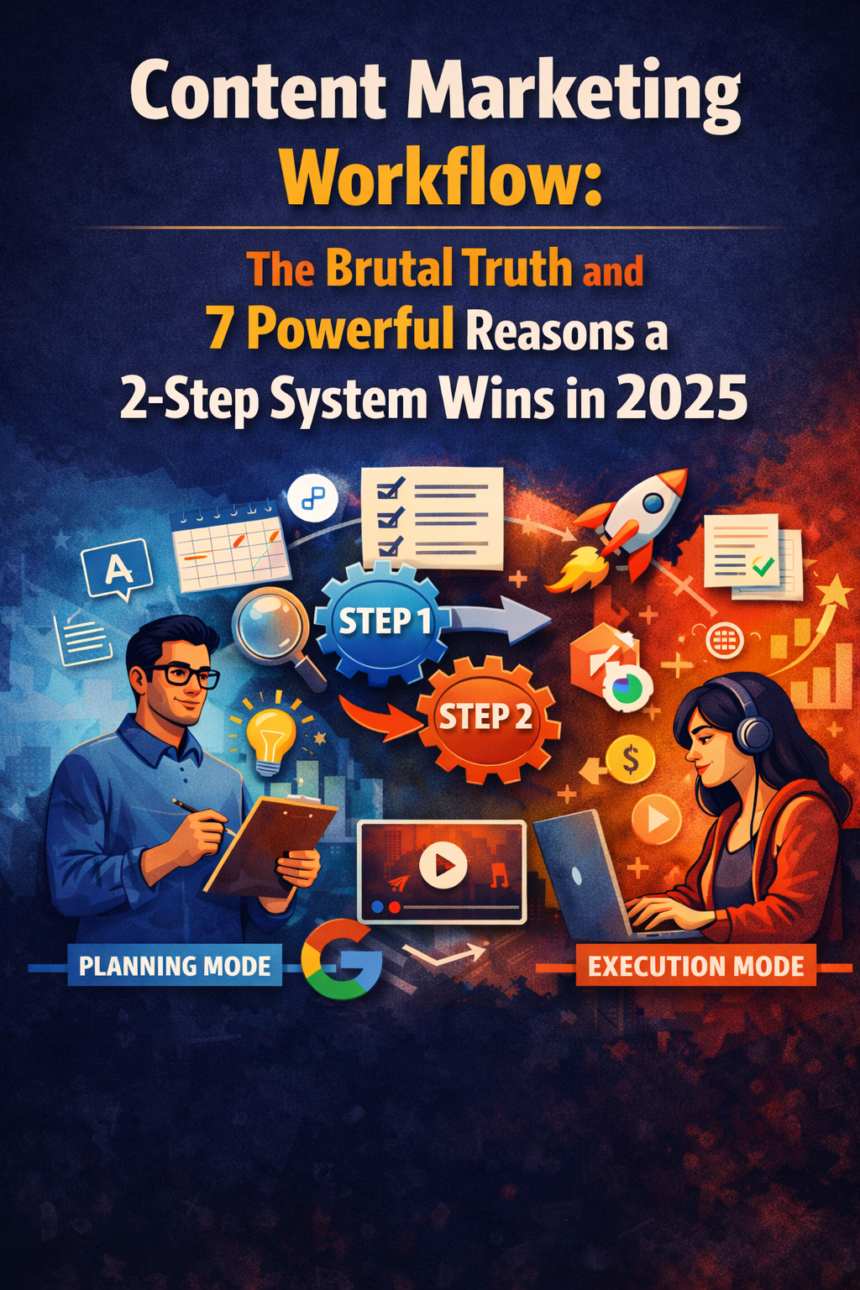
Content marketing workflow is why modern content doesn’t lose because it’s bad. It loses because it’s scattered, rushed, and built without a system. In 2025, the gap between content that converts and content that vanishes is no longer talent. It’s workflow discipline.
Why Content Workflows Are Suddenly Everywhere
Creators didn’t wake up one day and decide to become organized. They were pushed.
Algorithms tightened. Publishing speed accelerated. Burnout became the default state. The old model, sit down, get inspired, publish, collapsed under pressure.
A content marketing workflow solves a very modern problem: how to create consistently without relying on motivation. Planning removes friction. Execution becomes mechanical. That’s the shift happening across media teams, newsletters, solo creators, and AI-assisted publishers.
Midway through this shift, many teams started leaning into automation narratives, similar to what BigTrending explored in AI Co-Workers: Embracing Automation in the Workplace. The takeaway is simple: systems scale better than people.
X reaction:
“Everyone wants consistency until they realize it requires systems, not inspiration.”
The Rise of the 2-Step Publishing Model
Planning Mode vs Execution Mode
The most effective content marketing workflow separates thinking from writing.
Planning mode is where decisions happen: topic validation, keyword focus, link strategy, video selection, structure. No prose. No polish.
Execution mode is where words flow fast, because the hard thinking is already done.
Creators who blur these two stages stall constantly. Those who separate them publish faster and burn out less.
Why Creators Are Separating Thinking From Writing
This separation mirrors how professional newsrooms have worked for decades. Editors plan. Writers execute. The difference in 2025 is that even solo creators are adopting this model.
Reddit reaction:
“I doubled my output when I stopped writing and planning at the same time.”
SEO Is No Longer About Keywords, It’s About Order
For years, SEO advice obsessed over keyword density. That era is over.
Search engines now reward intent clarity and structural logic. A clean content marketing workflow enforces both.
When planning happens first, SEO becomes architectural instead of decorative. Titles align with search intent. Internal links support topic authority. External links add credibility instead of clutter.
If you want a signal that the market has moved from “tips” to “systems,” you see it in how business and marketing leaders frame content strategy today, especially across Forbes. And if you want the bigger media-tech angle, the broader shift toward operationalized publishing is a recurring theme at Wired.
The result is content that performs longer, not just louder.
YouTube as the New Editorial Anchor
Video is no longer optional context. It’s a trust signal.
Embedding a relevant YouTube video at the top of an article grounds the reader immediately. It confirms topical relevance, increases dwell time, and adds a visual layer that text alone can’t provide.
That “visual proof” effect matters because audiences are trained to look for context fast, a pattern you can see in how major publishers build multimedia storytelling across The New York Times.
In a strong content marketing workflow, video is selected during planning, not tacked on at the end.
What BigTrending’s Workflow Gets Right
BigTrending’s 2-step model works because it removes ambiguity.
Triggers define intent. Planning outputs are explicit. Execution follows rules, not mood. Nothing leaks between stages.
This approach mirrors the same distribution logic used in social-first platforms, which is why it pairs naturally with channels like Instagram. BigTrending previously broke this down in The Definitive Guide to Marketing Your Business on Instagram, where structure consistently outperformed spontaneity.
TikTok reaction:
“Creators who systemize early always win later.”
This Is Bigger Than Blogging
Workflow Literacy Is Becoming a Career Skill
This shift isn’t just about content. It’s about how modern knowledge work functions.
Media teams, solopreneurs, and even marketers using AI tools all benefit from clear execution boundaries. The Atlantic has explored how modern culture adapts to overloaded attention and decision fatigue, and that lens fits this trend perfectly: the workflow isn’t “extra,” it’s survival. If you want the cultural read on why people crave systems right now, start with The Atlantic.
A content marketing workflow doesn’t kill creativity. It protects it by giving it a safe container.
When structure handles the boring parts, creativity finally has room to breathe.
FAQ
What is a content marketing workflow?
It’s a structured system that defines how content is planned, created, and published, separating strategy from execution.
Why are creators moving to step-based publishing?
Because it reduces burnout, speeds up production, and improves consistency across platforms.
Does workflow structure really improve SEO?
Yes. Search engines reward clarity, intent alignment, and internal logic, all outcomes of strong planning.
Is YouTube necessary for written content in 2025?
Not mandatory, but increasingly powerful as a trust and engagement signal when used intentionally.