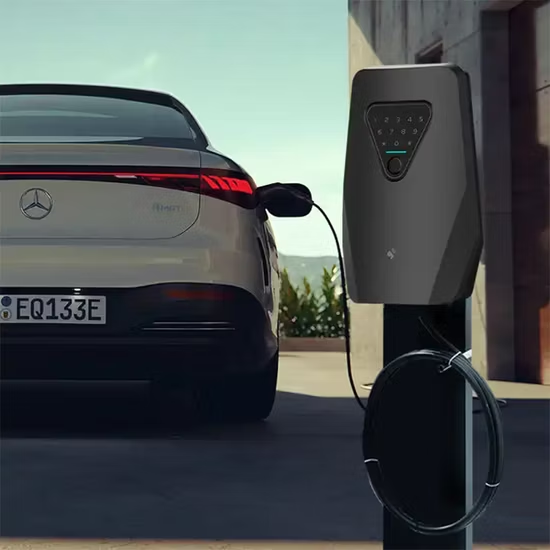
Electric vehicles are cruising into the mainstream, and this EV Charging Makeover is turning America’s grocery stores into the most convenient pit stops on the road. What used to be a routine food run is now doubling as a charge-up moment.
Grocery Stores Are Becoming America’s New EV Pit Stops
Grocery stores sit at the perfect intersection of time, location, and habit. Drivers already spend 20 to 45 minutes shopping, which lines up neatly with the charging window of many Level 2 and fast chargers. No detours. No waiting around. Just plug in, shop, and go.
This “errand charging” logic mirrors how technology quietly embeds itself into daily routines, a pattern BigTrending has already explored in AI co-workers embracing automation in the workplace.
Why Retailers Are Betting Big on EV Charging
For grocery chains, EV charging is not just about sustainability messaging. It is a strategic retail move rooted in behavior and data.
As seen in BigTrending’s analysis of the rise of surveillance and smart tech in physical spaces, once infrastructure becomes invisible and useful, adoption accelerates fast.
The Economics Behind the Chargers
Charging stations increase dwell time, and dwell time increases spending. EV drivers tend to stay longer in-store, browse more aisles, and return to locations where charging feels frictionless.
According to Forbes’ analysis on EV charging as a retail growth lever, grocery chains that invest early gain a loyalty advantage as EV ownership expands.
The Environmental and Infrastructure Ripple Effect
EV charging at grocery stores does more than reduce range anxiety. It fills a critical gap for renters, apartment dwellers, and urban drivers who cannot charge at home.
Experts at MIT Technology Review examining the real bottleneck in EV infrastructure point out that mass adoption depends less on highway superchargers and more on distributed, everyday locations like retail parking lots.
How This Pushes EV Adoption Forward
The future of EV charging is not just speed, but availability. Wired’s reporting on next-generation charging networks shows that when chargers appear where people already go, switching to an EV stops feeling like a lifestyle shift and starts feeling routine.
Social Buzz Is Fueling the Shift
This trend is not happening quietly. Real users are driving the narrative online.
TikTok reaction:
“Charging my EV while grabbing groceries feels like cheating the system. This whole EV Charging Makeover is long overdue.”
Reddit post from r/electricvehicles:
“I skipped a public station because my grocery store has faster chargers and better lighting. The EV Charging Makeover just makes more sense.”
X user reaction:
“Grocery stores with EV chargers just make sense. This EV Charging Makeover is how adoption actually happens.”
What Comes Next for EV Charging in Everyday Places
Grocery stores are only the beginning. Pharmacies, gyms, and big-box retailers are already testing similar setups.
According to BBC coverage on global EV charging expansion, countries with dense retail-based charging networks see faster EV adoption, even when government incentives are modest. Access consistently beats incentives.
Why This EV Charging Makeover Actually Matters
This shift is not about flashy technology. It is about removing friction from everyday life. When charging blends into routines people already trust, electric vehicles stop feeling experimental.
The EV charging makeover happening in grocery store parking lots may end up doing more for adoption than years of marketing campaigns.
Next time you pull into a grocery store, look around. You might already be standing in the future of transportation.
FAQ
Why are grocery stores installing EV chargers?
Because charging fits naturally into shopping time while increasing customer loyalty and in-store spending.
How long can you charge while grocery shopping?
Most grocery trips allow for a meaningful top-up, especially with Level 2 or fast chargers.
Are grocery store EV chargers free?
Some are complimentary, while others charge per session or per kilowatt-hour.
Will EV charging become standard at retail locations?
All signs point to yes as EV ownership expands beyond early adopters.