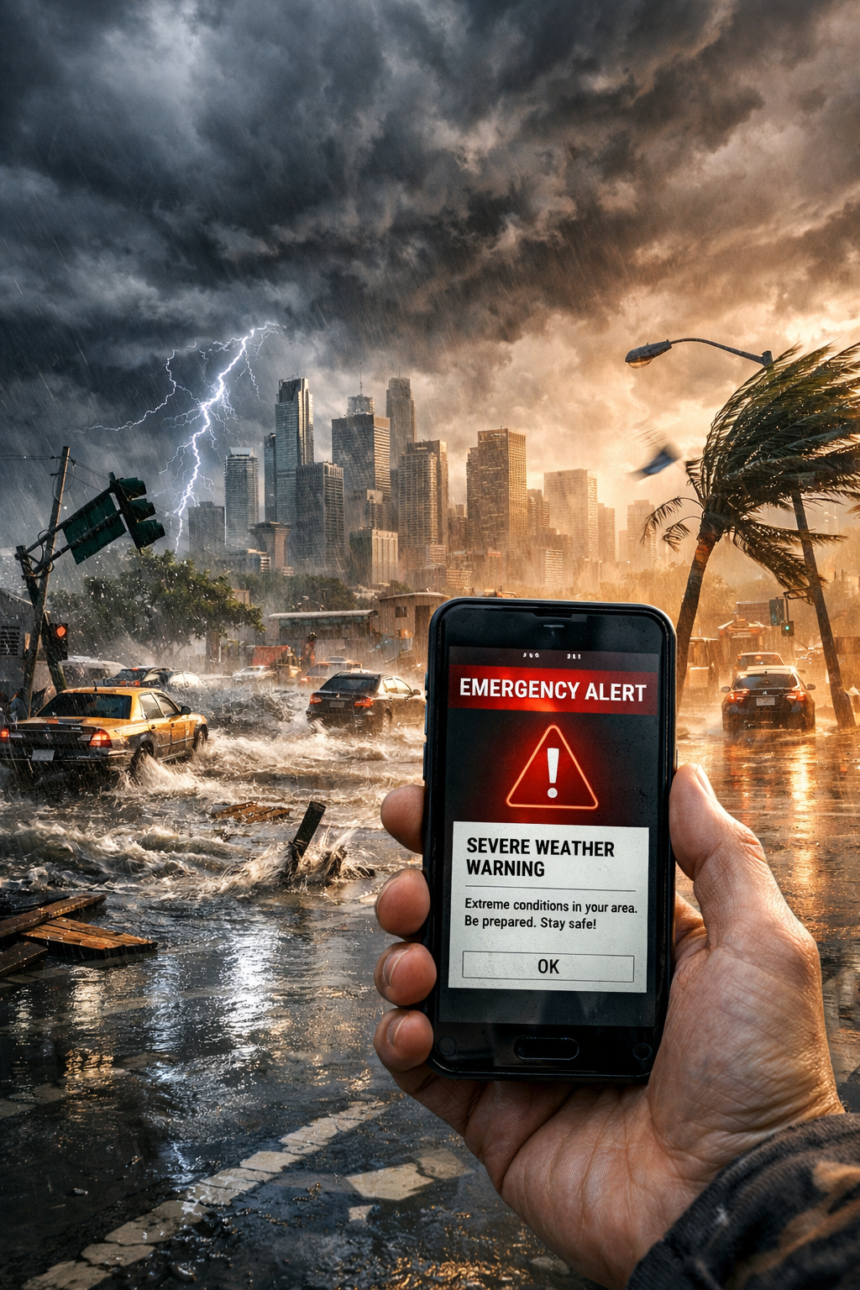
Your phone buzzes. Then buzzes again. Then again. Extreme weather alerts are no longer rare interruptions, they’re becoming part of the American daily rhythm.
Why extreme weather alerts suddenly feel nonstop
There was a time when a weather alert felt dramatic. A tornado warning. A hurricane update. Maybe a snow emergency once in a while. Now? It can feel like your screen is staging its own climate panic spiral.
One day it’s a flash flood warning. The next it’s an air quality alert, an extreme heat advisory, a severe thunderstorm watch, or a wildfire smoke notice. That shift is exactly why extreme weather alerts have become such a powerful signal of how daily life is changing in the U.S.
This isn’t just about meteorology getting louder. It’s about weather becoming more disruptive, more volatile, and more personal. The alerts feel relentless because the risks are increasingly layered. A single region can go from drought stress to flash flooding, from scorching heat to damaging storms, in a surprisingly short window.
A TikTok user put it bluntly: “My weather app feels more dramatic than my group chat now.”
And honestly? That lands.
A flood of notifications, and a flood of reality
Part of the reason extreme weather alerts feel more frequent is simple: there are more types of threats being monitored, and emergency communication has improved. People now receive alerts instantly on smartphones, watches, apps, highway signs, and local broadcasts. What used to stay on the evening news now lands in your hand in real time.
But that is only part of the story.
The bigger issue is that the underlying hazards are getting harder to ignore. Heat is becoming more dangerous. Heavy rainfall events are hitting harder. Wildfire smoke is affecting places far from the flames. Coastal flooding, storm surge, and severe storms are creating a more unstable risk landscape.
If you want a lifestyle-level example of how heat is already reshaping everyday behavior, even summer hydration trends are adapting, like these heat wave drinks popping up as people search for ways to cope with hotter days.
That may sound light, but it reflects something serious: weather is no longer background scenery. It is actively redesigning routines.
The data behind the surge
If this all feels more intense than it did a decade ago, that instinct is not random.
A useful place to start is NOAA’s billion-dollar disaster data, which tracks major U.S. weather and climate disasters with massive economic losses. The trend line is hard to shrug off. The country has experienced more costly disasters in recent years than in earlier decades, and the categories are not limited to one type of event. Severe storms, tropical cyclones, inland flooding, drought, freeze events, and wildfires all show up in the mix.
That matters because extreme weather alerts are not happening in a vacuum. They are part of a wider pattern of higher-impact events, more exposure, and greater vulnerability.
Here’s the twist, though: more alerts do not always mean forecasters are overreacting. In many cases, it means weather services are better at detecting hazards early and warning people faster. That’s a good thing. The bad thing is that they increasingly have real hazards to warn about.
A Redditor summed up the collective mood pretty well: “The weirdest part is how normal it’s starting to feel to check the weather like it’s breaking news.”
Exactly.
Heat is no longer just uncomfortable, it’s a public safety issue
Extreme heat used to be treated like an inconvenience. Hot day, drink water, move on. That framing feels wildly outdated now.
Today, heat alerts can affect outdoor work, school sports, public transit, energy demand, emergency rooms, and older adults living alone. Cities such as Phoenix and Las Vegas have become symbols of this shift, but the issue is broader than the desert Southwest. Places with less heat adaptation, fewer cooling systems, or higher humidity can face even greater danger.
This is why extreme weather alerts around heat have become so central. They are not warning you that summer exists. They are warning you that routine exposure may become medically risky.
And heat rarely travels alone. High temperatures can worsen drought stress, increase wildfire risk, strain electrical grids, and intensify air quality problems. It becomes a stack, not a single issue.
An X user captured that fatigue with one line: “Extreme weather alerts used to feel seasonal. Now they feel permanent.”
It’s hard to argue with that.
Flooding, flash storms, and weather whiplash
Then comes the other side of the climate chaos coin: water.
Flooding is one of the clearest examples of why people feel ambushed by modern weather. A storm can unload huge volumes of rain in a short time, especially in paved urban areas where water has nowhere useful to go. Streets become rivers. Basements flood. Commutes collapse. Phones light up with warnings that suddenly feel very urgent.
That is why practical preparedness matters. Even basic flood preparedness guidance can make a real difference when a warning arrives faster than expected.
What makes this trend especially unsettling is the whiplash factor. Communities can swing from dry conditions to flash flooding, from smoky skies to severe thunderstorms, from one alert type to another. The system feels less stable because, in many places, it is.
And when severe storms intensify over developed areas, the downstream consequences multiply. Insurance claims rise. Infrastructure takes a hit. Recovery gets more expensive. Anxiety stays in the room long after the clouds move on.
So, is climate change driving extreme weather alerts?
This is the question under almost every conversation about modern weather, and it deserves a direct answer.
In broad terms, yes: warming is helping load the dice toward more frequent and more intense extremes in several categories. Not every single event can be pinned entirely on climate change, and attribution varies by event type. But the overall pattern is strong enough that the science is not dancing around it anymore.
A solid primer is NASA’s overview of extreme weather and climate change, which explains how rising temperatures influence heat waves, heavy rainfall, drought, wildfire conditions, and more.
Here’s the clean version. Warmer air can hold more moisture, which can contribute to heavier downpours. Higher temperatures can increase evaporation and worsen drought in some regions. Hotter background conditions also make extreme heat more likely and more dangerous. Sea level rise can worsen coastal flooding. Add local geography, infrastructure, and land use, and you get a recipe for more disruptive alert-worthy events.
That does not mean every storm is “caused by climate change” in a simplistic one-line sense. It means the environment in which storms, heat waves, and floods develop is shifting in ways that often increase risk.
Why alerts can feel emotionally exhausting
There is also a psychological side to this story, and it matters more than people admit.
Living with repeated extreme weather alerts changes behavior, mood, and perception. You start checking radar before dinner plans. You think about backup batteries, bottled water, air filters, and whether your car is parked in the wrong place. Parents wonder about school cancellations. Travelers scan for delays. People with asthma watch smoke maps like stock tickers.
That constant anticipatory mindset creates its own kind of fatigue.
It is not just weather stress. It is alert stress.
This is also why adaptation needs to be practical, not abstract. People do not need vague encouragement to “be resilient.” They need systems, routines, and habits that make disruption easier to manage. The same logic behind everyday habits that make daily life more resilient applies here too: small repeatable actions often matter more than dramatic one-time prep.
Think less apocalypse fantasy, more everyday readiness:
keep chargers full, save local emergency contacts, know your evacuation zone if relevant, have medications accessible, track cooling options during heat waves, and understand which alerts in your area deserve immediate action.
Not glamorous. Very useful.
How cities and communities are adapting
The good news is that not every trend line is doom-coded.
Cities, utilities, emergency managers, and public-health agencies are making changes. Some are investing in cooling centers, flood barriers, upgraded drainage, tree canopy expansion, updated building codes, and more targeted public messaging. Weather forecasting and alert delivery have also become more sophisticated, which helps people react faster.
Broader climate trend data also appears in EPA’s updated climate indicators, which help frame how heat, precipitation, and other conditions are shifting over time.
That matters because adaptation is not just a government word. It shows up in ordinary life:
people changing commute habits,
schools altering sports schedules,
businesses adjusting work hours,
families rethinking summer routines,
and neighborhoods taking preparedness more seriously.
In other words, extreme weather alerts are not just warning us about the weather. They are quietly pushing a redesign of how America functions.
The new normal, but not the final one
It is tempting to think this is just the new normal and that the only option is to get used to it. But that framing is incomplete.
Yes, the alert-heavy environment is real. Yes, people need to prepare for it. But preparation alone is not the whole story. Reducing long-term risk still depends on mitigation, better infrastructure, smarter land use, cleaner energy systems, and policies that treat climate resilience as essential rather than optional.
The point is not to panic every time your phone vibrates. The point is to understand why those alerts are showing up more often, what they mean in context, and how to respond with less confusion and more control.
That shift, from passive stress to informed action, is where the article really lands.
Because behind every alert is a bigger message: weather is changing, and society has to change with it.
FAQ About Extreme Weather Alerts
Are extreme weather alerts really increasing nationwide?
In many parts of the U.S., extreme weather alerts feel more common because both hazardous events and real-time warning systems have expanded. Better communication explains part of the increase, but more disruptive heat, flooding, severe storms, and wildfire-related risks also play a major role.
What causes extreme weather alerts to spike?
A spike in extreme weather alerts can come from multiple factors at once: stronger storms, heat waves, rapid rainfall, drought conditions, wildfire smoke, and improved detection by forecasting agencies. Population growth in risk-prone areas can also make alerting more necessary.
Are extreme weather alerts linked to climate change?
Many categories of extreme weather alerts are increasingly tied to climate change, especially those related to extreme heat, heavy rainfall, wildfire conditions, and some flooding risks. Not every event is explained by climate change alone, but warming is making several extremes more likely or more intense.
How should people prepare for extreme weather alerts?
The smartest response to extreme weather alerts is practical preparation. Know your local risks, keep emergency supplies ready, charge devices, monitor official warnings, and make a simple plan for heat, flooding, power loss, or evacuation depending on where you live.
Why do extreme weather alerts feel more stressful now?
Extreme weather alerts feel more stressful now because they arrive instantly, more often, and in a world already full of digital overload. They also affect more parts of daily life, from health and school to commuting, insurance, and basic peace of mind.