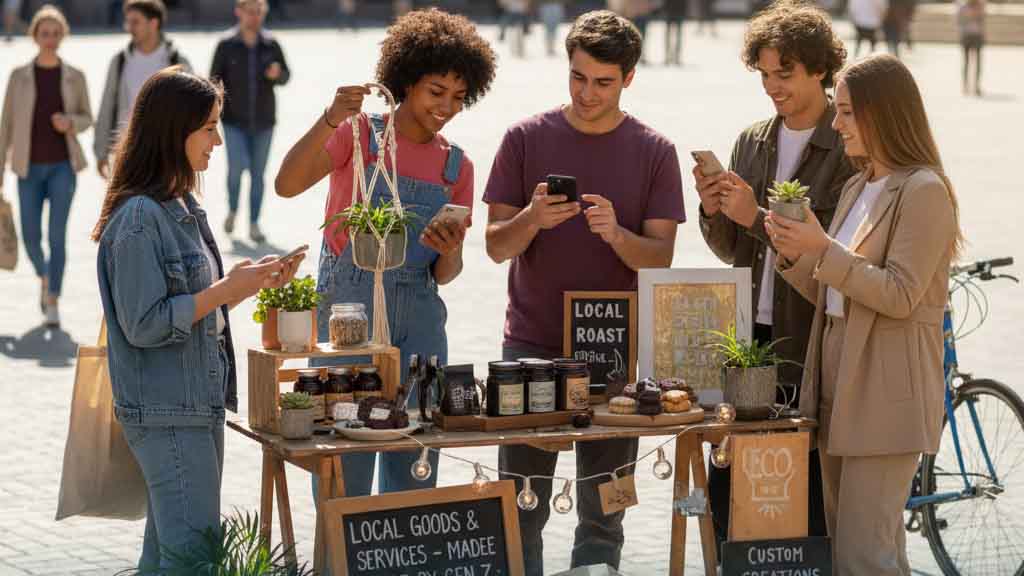
Farmers markets are no longer just about fresh tomatoes and sourdough.
Across the U.S., they are quietly becoming launchpads for Gen Z side hustles, where small ideas turn into real income, real brands, and real communities.
Why Gen Z Is Turning Farmers Markets Into Side Hustle Launchpads
Why Gen Z Side Hustles Are Going Offline 🌿
Gen Z side hustles are often associated with digital platforms, Etsy shops, TikTok storefronts, and Instagram DMs. But something interesting is happening offline. Young creators are stepping away from screens and setting up pop up booths at local farmers markets.
For Gen Z, these markets offer something the internet cannot fully replicate: human connection. Face to face sales, live feedback, and real conversations build confidence and brand identity faster than anonymous online traffic.
This shift is part of a wider movement where Gen Z side hustles prioritize authenticity over scale. Farmers markets feel local, personal, and values driven, which aligns closely with how Gen Z approaches work and money.
Farmers Markets as the New Testing Ground 🧺
For anyone starting Gen Z side hustles, farmers markets act like a real world beta test.
Instead of spending months perfecting a website, young sellers can:
- Test pricing in real time
- Observe customer reactions instantly
- Adjust products week by week
- Validate demand without heavy investment
This low risk environment makes farmers markets ideal for early stage Gen Z side hustles. A table, a tent, and a small inventory are often enough to get started.
According to reporting from the New York Times, farmers markets have evolved into community hubs rather than simple retail spaces. That transformation opened the door for young entrepreneurs to experiment publicly without pressure.
The Rise of the Pop Up Booth Mentality 🚀
Pop up booths fit Gen Z side hustles perfectly. They are flexible, temporary, and commitment light.
Instead of signing long leases or locking into one idea, Gen Z sellers rotate concepts:
- Jewelry one month
- Candles the next
- Vintage clothing the following season
This mindset reflects how Gen Z views work overall. Careers are no longer linear, and side hustles are allowed to evolve.
Forbes has highlighted pop up retail as one of the most cost efficient ways for small brands to grow. Farmers markets simply remove even more friction by supplying foot traffic and built in trust.
What Gen Z Is Actually Selling 🛍️
Gen Z side hustles at farmers markets are surprisingly diverse. Some of the most common categories include:
- Handmade jewelry and accessories
- Natural skincare and soaps
- Art prints and stickers
- Upcycled fashion
- Specialty drinks and baked goods
What ties them together is storytelling. Each booth is personal. Sellers explain why they started, how they source materials, and what values they stand for.
That narrative driven selling style feels natural to Gen Z and resonates strongly with shoppers who want meaning behind purchases.
Social Proof From the Real World 💬
Social platforms are full of Gen Z creators documenting their farmers market journeys.
A TikTok comment reads:
“Selling online is cool, but farmers markets changed everything for my confidence.”
On Reddit, one user shared:
“My Gen Z side hustle finally made sense once I talked to customers face to face.”
An X post summed it up simply:
“Farmers markets feel like the anti algorithm. And I love that.”
These reactions highlight why Gen Z side hustles thrive offline. Visibility is earned through presence, not reach.
The Economics Behind Gen Z Side Hustles 💰
From a financial perspective, farmers markets make sense.
Costs are predictable:
- Booth fee
- Inventory
- Basic supplies
There are no platform fees, ad budgets, or algorithm changes to worry about. According to Wikipedia’s overview of pop up retail, temporary selling formats significantly reduce overhead while increasing customer engagement.
For Gen Z side hustles, this means faster learning and quicker profitability, even at small scales.
Why This Trend Is Not Going Away 🔮
Gen Z side hustles reflect a deeper cultural shift. Young people want:
- Control over their time
- Purpose driven income
- Local impact
- Community recognition
Farmers markets deliver all four.
As discussed in one of our BigTrending trend pieces on local economies, spaces that combine commerce and community tend to survive cultural shifts better than purely digital models.
Gen Z is not rejecting the internet. They are balancing it with real world grounding.
Lessons for Anyone Starting a Side Hustle 📌
The success of Gen Z side hustles at farmers markets offers clear takeaways:
- Start small and visible
- Test ideas publicly
- Build relationships before scaling
- Let feedback guide growth
This approach reduces burnout and increases long term sustainability, something Gen Z values deeply.
FAQ: Gen Z Side Hustles at Farmers Markets
Why are Gen Z side hustles moving offline?
Because offline selling builds trust, confidence, and community faster than digital only models.
Are farmers markets profitable for Gen Z side hustles?
Yes, especially due to low overhead and direct customer access.
Do you need a registered business to start?
In many cases, no. Most markets allow small vendors with basic permits.
Can a farmers market side hustle scale?
Absolutely. Many Gen Z brands use markets as launchpads before expanding online.
A Cultural Shift Hiding in Plain Sight 🌱
Gen Z side hustles at farmers markets are not a nostalgia trend. They are a signal. Young entrepreneurs are redefining success as something slower, more human, and more connected.
While algorithms change weekly, a folding table, a smile, and a good product still work. And Gen Z knows it.
If you want to explore more cultural shifts shaping work and money, also check out one of our latest trending pieces on BigTrending, it connects perfectly with this movement.