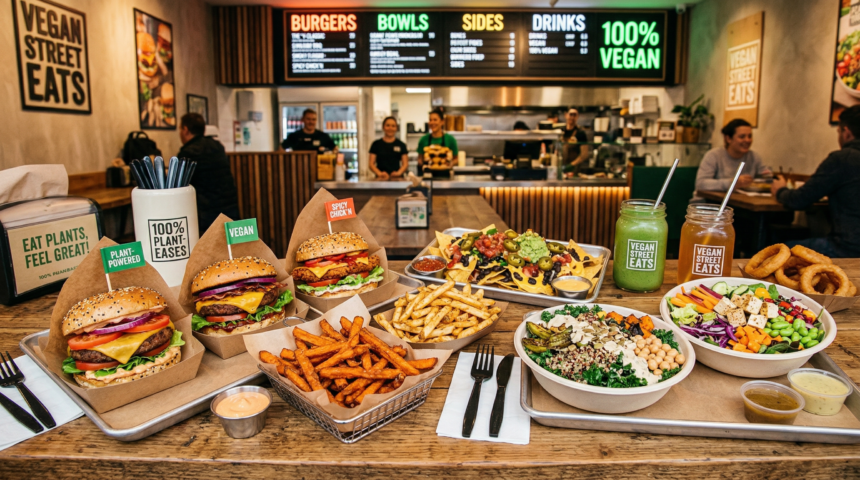
The golden arches and the neon “Open” signs of the American fast-food landscape are undergoing a cellular transformation. For decades, the drive-thru was a temple of beef, grease, and tradition, where the idea of a “veggie burger” was a dry, bean-filled afterthought relegated to the bottom of the menu. Today, that script has been flipped. The sizzle you hear on the grill might not be coming from a cow, and the “bleeding” heart of a premium burger is more likely to be beet juice than hemoglobin. This isn’t just a fleeting trend; it’s a fundamental restructuring of how a nation synonymous with the hamburger chooses to eat. We are witnessing a monumental shift in the culinary zeitgeist, where the convenience of fast food meets the ethics and science of modern botany.
The landscape of quick-service dining is evolving as the growth of plant-based fast food outpaces traditional meat offerings in several key demographics.
The hunger for sustainable, ethical, and delicious alternatives is no longer a niche craving but a mainstream demand.
The Seismic Shift: Tracking the Growth of Plant-Based Fast Food
The historical trajectory of the American burger is a fascinating study in industrialization, but the current chapter is all about biology. When Burger King launched the Impossible Whopper nationwide in 2019, it wasn’t just adding a menu item; it was firing a shot across the bow of the entire meat industry. This move signaled that the growth of plant-based fast food had moved beyond the experimental phase and into the high-volume reality of global supply chains. The success of that launch proved that consumers were willing to pay a premium for a sandwich that mimicked the sensory experience of meat without the environmental or ethical baggage. It broke the “tofu curtain” that had previously kept plant-based options trapped in high-end coastal bistros.
Statistical data from the Good Food Institute indicates that the market for plant-based alternatives has seen double-digit growth year-over-year, even as traditional meat sales fluctuated. This surge is driven by a unique “flexitarian” consumer—someone who isn’t necessarily a vegetarian but is actively trying to reduce their meat intake. These diners aren’t looking for a salad; they want the ritual of the fast-food experience. They want the salty, savory, umami-rich hit of a burger and fries, but they want it to align with their evolving values. The rapid expansion of these options at chains like Carl’s Jr., White Castle, and Starbucks has created a feedback loop where increased availability drives increased curiosity.
The infrastructure required to support this shift is staggering. It involves massive investments in pea protein processing plants and sophisticated flavor labs where chemists work to replicate the specific Maillard reaction that gives grilled meat its aroma. We aren’t just talking about mashed vegetables in a bun anymore. We’re talking about molecular engineering designed to fool the most ardent meat-lover. This technological arms race has lowered the barrier to entry for many consumers who previously found plant-based options unpalatable. When the texture is right, the resistance fades.
As we look at the geography of this movement, it’s clear that the growth of plant-based fast food isn’t restricted to liberal urban hubs. Data shows that midwestern and southern states are seeing a spike in meatless orders, often driven by younger consumers who see plant-based eating as a status symbol or a necessary climate action. This democratization of “alt-meat” is perhaps the most significant indicator that the change is permanent. It’s no longer a coastal eccentricity; it’s a suburban reality. Every time a new franchise adds a non-dairy milk or a soy-based sausage, the cultural needle moves further away from the 20th-century meat-centric model.
The role of private equity and venture capital cannot be ignored here. Billions of dollars have poured into startups like Beyond Meat and Impossible Foods, allowing them to scale at a pace that traditional food companies could only dream of. This capital infusion has enabled these brands to partner with the biggest names in the business, ensuring that their products are front and center on the digital kiosks where millions of Americans make their daily lunch decisions. This isn’t just about grass-roots activism; it’s a high-stakes financial play that is successfully betting on the future of protein.
From Niche to Mainstream: The Beyond Meat and Impossible Foods Revolution
The rivalry between Beyond Meat and Impossible Foods is the modern equivalent of the “Cola Wars.” Both companies took drastically different approaches to the same problem: how do you make a plant taste like a cow? Beyond Meat leaned into pea protein and a clean-label aesthetic, while Impossible Foods bet on “heme,” a molecule containing iron that they fermented from yeast to give their burgers a distinctively meaty “bleed.” This competition has been a primary engine for the growth of plant-based fast food, as each company vied for exclusive contracts with major fast-food players.
White Castle was one of the first to take the plunge, introducing the Impossible Slider to rave reviews. It was a calculated risk that paid off, proving that even “craveable” fast-food icons could be replicated with plants. This success paved the way for more complex innovations, such as KFC’s plant-based fried chicken and Taco Bell’s various experiments with oat-based meat and marinated soy. Each of these launches serves as a massive marketing campaign, normalizing the idea of “meat from plants” to a demographic that might never step foot in a health food store.
Economic Drivers Behind the Meatless Movement
The economics of the fast-food industry are notoriously thin-margined, so the shift toward plant-based options isn’t just a moral choice; it’s a financial strategy. The volatility of the traditional meat market—plagued by disease outbreaks like avian flu, rising grain prices, and labor shortages in slaughterhouses—has made beef and pork increasingly unpredictable. In contrast, plant-based proteins offer a more stable supply chain once the initial infrastructure is built. Companies are realizing that diversifying their protein sources is a vital hedge against the climate-related disruptions that are becoming more frequent in traditional ranching.
While the “green premium” (the extra cost consumers pay for plant-based options) remains a hurdle, it’s shrinking. Scale is the great equalizer in the food industry. As the growth of plant-based fast food continues, the cost of producing these patties at scale is dropping toward parity with ground beef. When a plant-based burger costs the same as a Big Mac, the final barrier for the average consumer will vanish. We’re already seeing this in certain European markets where fast-food chains have achieved price parity, leading to a massive surge in meatless orders.
There’s also the matter of “share of wallet.” Fast-food brands know that the “veto vote” is real. If one person in a group of five is a vegan, and your restaurant doesn’t offer a substantial plant-based meal, the whole group goes elsewhere. By adding these options, chains aren’t just attracting vegans; they’re capturing the entire group’s revenue. It’s a savvy move to ensure that the brand remains relevant to a diverse range of dietary preferences. This inclusivity is a cornerstone of modern brand loyalty in the food and beverage sector.
Furthermore, the logistical ease of plant-based products can’t be understated. Frozen plant-based patties often have a longer shelf life and lower risk of foodborne pathogens compared to raw ground beef. For a franchise owner, this means less waste and lower insurance risks. While the initial marketing and equipment costs can be high, the long-term operational benefits are becoming more apparent. The industry is moving toward a future where “protein” is an interchangeable commodity, sourced from whichever origin—animal or plant—is most efficient at that moment.
Finally, we must consider the role of government subsidies and international trade. As global focus shifts toward carbon reduction, some countries are considering taxes on high-carbon foods like beef. Forward-thinking fast-food corporations are getting ahead of these potential regulations by building out their plant-based portfolios now. They are transforming from “hamburger stands” into “protein providers,” a shift in identity that allows them to navigate a changing legal and social landscape without losing their core customer base.
Health vs. Convenience: The Nutritional Paradox
One of the most complex debates surrounding the growth of plant-based fast food is the question of health. Is a processed plant-based burger actually better for you than a beef one? The answer is nuanced. On one hand, these burgers typically contain zero cholesterol and are often higher in fiber. On the other hand, they are frequently high in sodium and saturated fats (often from coconut oil) to mimic the mouthfeel of meat. It’s a classic nutritional paradox: we’ve created a product that is “better for the planet” but not necessarily a “health food” in the traditional sense.
For many consumers, the switch to plant-based fast food is a form of “harm reduction.” They aren’t looking to eat a kale salad; they want to indulge in a burger without the heart-clogging baggage of animal fat. This perception of a “health halo” is a powerful marketing tool. Even if the calorie count is similar, the absence of antibiotics and growth hormones found in industrial meat is a significant selling point. You can learn more about these transitions in our guide to sustainable food systems, which explores how our choices impact long-term wellness.
The ingredient lists of these products are often long, leading to critiques about “ultra-processed” foods. Critics argue that swapping a single-ingredient beef patty for a 20-ingredient plant patty is a step backward for nutrition. However, proponents point out that industrial beef is far from a “single ingredient” product once you factor in the processing, preservatives, and the corn-heavy diet of the cattle. The transparency of plant-based ingredients, while complex, allows for a level of nutritional engineering that isn’t possible with animal meat—such as fortifying burgers with Vitamin B12 or reducing specific fats.
The conversation is also shifting toward the “clean label” movement. Second-generation plant-based products are already hitting the market with shorter ingredient lists and fewer additives. This evolution is a direct response to consumer demand for transparency. As the growth of plant-based fast food matures, we can expect to see a bifurcation of the market: one side focusing on hyper-realistic meat clones and the other on whole-food, minimally processed vegetable patties that don’t try to hide their plant origins.
Ultimately, the fast-food industry has never been the bastion of health. Its primary goal is taste and convenience. The fact that we are now debating the nutritional nuances of a plant-based Whopper vs. a beef Whopper is, in itself, a sign of incredible progress. It shows that the industry is no longer ignoring the health implications of its menu, but is actively trying to engineer solutions that satisfy the lizard brain’s craving for fat and salt while providing a slightly better nutritional profile.
Environmental Impact and Ethical Consumption
The most compelling argument for the growth of plant-based fast food is undoubtedly environmental. Industrial animal agriculture is one of the leading contributors to greenhouse gas emissions, deforestation, and water scarcity. A single beef burger requires an astronomical amount of water to produce—estimates vary, but it’s often cited as high as 600 gallons per patty when you include the water needed for the cattle’s feed. In contrast, plant-based burgers use roughly 90% less water and 90% less land, while emitting significantly fewer greenhouse gases.
This data is not lost on the younger generation. For Gen Z and Millennials, the climate crisis isn’t an abstract future threat; it’s a defining reality. Choosing a plant-based option at the drive-thru is a low-friction way to exercise their environmental agency. It’s “activism you can eat.” When a major chain like McDonald’s introduces the McPlant, it’s not just a menu expansion; it’s a massive reduction in the company’s total carbon footprint, given the sheer volume of sandwiches they sell daily.
Ethical considerations also play a major role. The horrors of factory farming have been well-documented, and more consumers are becoming uncomfortable with the cognitive dissonance required to enjoy a cheap burger. Plant-based fast food offers a “guilt-free” alternative that doesn’t require a total lifestyle overhaul. You don’t have to become a leather-shunning vegan to decide that your Tuesday lunch doesn’t need to involve an animal. This “casual ethics” is a powerful driver of market change.
The Plant Based Foods Association has highlighted how these shifts are leading to a more resilient food system. By moving “down the food chain”—eating the plants directly rather than feeding them to animals and then eating the animals—we become much more efficient as a species. This efficiency is crucial as the global population heads toward 10 billion. We simply do not have the land or water to feed everyone a mid-20th-century American diet based on heavy beef consumption.
The transition isn’t without its challenges, however. The monoculture farming of soy and peas carries its own environmental risks. To truly be “green,” the plant-based industry must ensure that its ingredients are sourced through regenerative agricultural practices. The growth of plant-based fast food must be paired with a commitment to soil health and biodiversity. If we simply replace “Big Beef” with “Big Pea,” without changing how we farm, we will eventually run into the same ecological walls.
Cultural Shifts: Why Gen Z is Leading the Charge
If you want to see the future of the American diet, look at a college campus. Gen Z is the most diverse and socially conscious generation in history, and their eating habits reflect that. They are the primary drivers behind the growth of plant-based fast food, treating their dietary choices as an extension of their identity. For them, eating meat every day feels “dated” or “out of touch.” They have grown up with a wide variety of milk alternatives and “meatless Mondays,” making the transition to plant-based fast food feel like a natural evolution rather than a sacrifice.
Social media has played an outsized role in this cultural shift. TikTok and Instagram are flooded with reviews of the latest plant-based releases, turning a simple fast-food run into a viral moment. When a celebrity like Snoop Dogg or Lizzo promotes a plant-based brand, it carries more weight with this demographic than any traditional television commercial ever could. The “cool factor” of plant-based eating is a new phenomenon that has completely rebranded what was once seen as a “hippy” lifestyle.
This generation also values customization. The “build-your-own” model popularized by Chipotle and late-night taco spots allows for easy substitutions. They don’t want a fixed menu; they want a platform where they can swap out dairy for oat milk or beef for a plant-based crumble. This demand for flexibility has forced fast-food giants to rethink their entire kitchen workflow. It’s no longer about pushing a single “hero” product; it’s about providing a toolkit for the consumer to create their own meal.
There is also a growing awareness of food justice among younger consumers. They recognize that the traditional meat industry often exploits marginalized workers and disproportionately affects the health of lower-income communities. By supporting the growth of plant-based fast food, they see themselves as part of a movement toward a more equitable and sustainable food system. This sense of purpose makes their brand loyalty much harder to break.
However, it’s important to note that this isn’t just about the youth. Older generations are also participating, often driven by medical advice to lower their cholesterol or blood pressure. The “grandparent effect”—where grandkids influence the eating habits of their elders—is a real phenomenon in the plant-based space. As more families opt for meatless options during shared meals, the stigma around “fake meat” continues to dissolve across all age brackets.
The Future of the Drive-Thru
What does the next decade look like for the American fast-food experience? We are likely moving toward a “hybrid” model. It’s unlikely that beef will disappear entirely from the menu, but it will no longer be the default. We will see the growth of plant-based fast food manifest in more creative ways: plant-based seafood (like “tuna” made from chickpeas or “shrimp” from algae), 3D-printed steaks, and even cultivated (lab-grown) meat.
Cultivated meat is the next big frontier. This is actual animal meat grown from cells in a bioreactor, without the need to slaughter an animal. While still in the early stages of regulatory approval and scaling, several fast-food giants are already eyeing this technology. It offers the holy grail: the exact taste and texture of meat with the environmental profile of a plant. When this hits the drive-thru, the distinction between “plant-based” and “meat” will become even more blurred.
We are also seeing a shift in restaurant design. The “plant-forward” fast-food restaurant of the future will likely feature more natural light, indoor herb gardens, and transparent kitchens. The goal is to distance the brand from the “industrial” feel of old-school fast food and move toward a “fresh and functional” aesthetic. This is already happening with newer chains like Veggie Grill and Slutty Vegan, which are proving that plant-based fast food can be just as indulgent and “craveable” as its meat-based counterparts.
The integration of AI and personalized nutrition will also play a role. Imagine a drive-thru that recognizes your car and suggests a plant-based meal based on your recent health data or carbon footprint goals for the week. This level of hyper-personalization will make choosing the plant-based option even easier. The convenience factor, which has always been the heart of fast food, will be leveraged to promote more sustainable choices.
Ultimately, the growth of plant-based fast food is a testament to human ingenuity. We have taken the quintessential American meal—the burger—and re-engineered it for a new era. We are learning that we can keep the traditions and the flavors we love while discarding the parts of the process that no longer serve us or the planet. The drive-thru of the future is green, not because of the color of the food, but because of the philosophy behind it.
Frequently Asked Questions
What is driving the growth of plant-based fast food in rural areas?
While often associated with cities, the growth of plant-based fast food in rural areas is driven by increased availability at national chains and a growing awareness of health issues. Many rural consumers are flexitarians looking to reduce their red meat intake due to heart health concerns, and the convenience of a plant-based burger at a local franchise makes that transition easier.
Are plant-based fast food options actually healthier than meat?
It depends on your health goals. Plant-based options usually have zero cholesterol and more fiber, which are major wins for heart health. However, they can be high in sodium and saturated fats. The growth of plant-based fast food has led to more “processed” options, so it’s always best to check the nutritional label if you’re watching your salt intake.
Which fast-food chain has the most plant-based options?
Currently, chains like Burger King, Starbucks, and Taco Bell are leaders in this space. Taco Bell, in particular, has been a favorite for vegetarians for years because of its easily customizable menu, but the recent growth of plant-based fast food has seen almost every major player, from KFC to McDonald’s, pilot or launch significant meatless items.
How does the growth of plant-based fast food affect the environment?
The impact is significant. Switching from a beef burger to a plant-based one reduces water usage by about 90% and land use by a similar margin. It also dramatically lowers greenhouse gas emissions. As more people choose these options, the cumulative environmental benefit helps move the needle on climate change goals within the food industry.
Will plant-based meat ever be cheaper than real meat?
Yes, price parity is the ultimate goal. As the scale of production increases and technology improves, the cost of plant-based proteins is steadily falling. Many industry experts predict that within the next few years, the growth of plant-based fast food will reach a point where meatless burgers are actually cheaper than their beef counterparts due to the inherent efficiencies of plant-based supply chains.