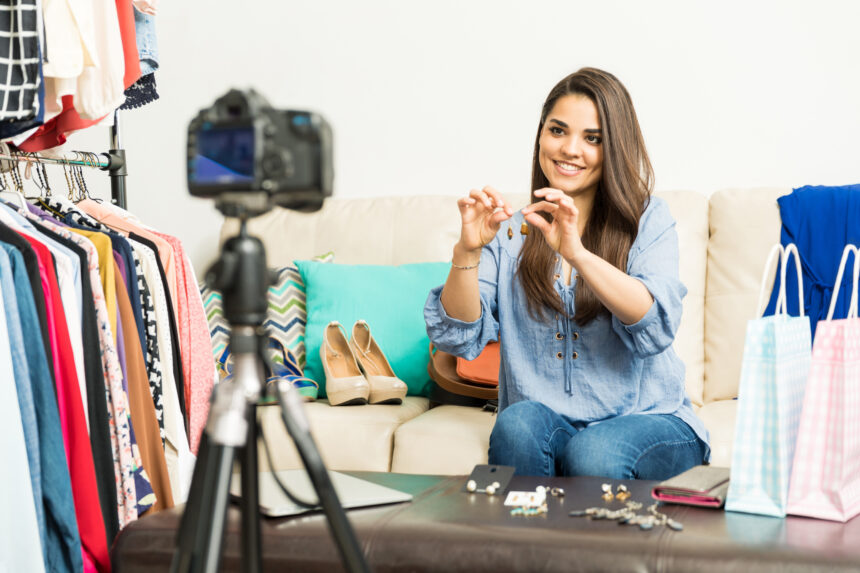
Livestream shopping is what happens when e-commerce stops being a quiet solo activity and turns into a live show you can actually talk back to. And yes, it’s catching on in America because it feels less like “buy now” and more like “hang out… and maybe score a deal.”
Livestream Shopping Is Catching On in America (and it’s not subtle)
If you’ve ever opened your phone “just to check something” and suddenly found yourself watching someone demo a product in real time while the chat screams “ADD TO CART,” congrats: you’ve already met the vibe.
Livestream shopping is catching on in America because it hits a perfect modern sweet spot: it’s entertainment, it’s community, and it’s shopping with a pulse. Instead of sterile product photos and suspiciously perfect reviews, you get a human being showing you the thing, using the thing, answering questions, and reacting when something goes hilariously wrong (which is… oddly reassuring).
What livestream shopping actually is (in one scroll)
At its core, livestream shopping is a live video stream where the host showcases products and viewers can buy instantly without leaving the experience. The “live” part matters because it creates urgency, authenticity, and the sense that you’re part of something happening right now.
If you want the clean, non-hype definition to ground the whole concept, start with what livestream shopping actually means and then come back to the fun part: why it’s suddenly everywhere.
China wrote the playbook, the US is remixing it
Livestream shopping didn’t start in the U.S. China ran the early experiments at scale and basically proved the format could print revenue when executed well. The pandemic poured gasoline on it, but the secret sauce wasn’t “people were bored.”
It was that livestream shopping made online buying feel social again.
Why it worked so well overseas
In China, livestream shopping leaned into what internet culture already loved: hosts with strong personalities, fast-paced product demos, hard-to-miss deals, and a community that treats the chat like a stadium. It wasn’t a side feature. It was a full-blown entertainment format with shopping as the outcome.
And the data-driven side of this isn’t subtle either. Brands love livestream shopping because it compresses the funnel: attention, trust, product understanding, and purchase all happen in one session.
A strong business-level framing is McKinsey’s take on why live commerce works, especially if you want to understand why conversion rates tend to jump when viewers can see the product and ask about it before buying.
Why it’s finally clicking in America now
America didn’t need “another way to shop.” It needed a way to shop that feels less lonely and more real. Between influencer culture, short-form video dominance, and the general distrust of overly polished product marketing, livestream shopping lands at the right moment.
Also, Americans love a good deal—especially a deal that feels like you had to be there to get it.
And the biggest unlock? Platforms stopped treating shopping like a boring add-on and started treating it like content.
TikTok Shop, Amazon Live, Instagram — the platform arms race 🥊
Livestream shopping in the U.S. isn’t one platform. It’s a competition between ecosystems that all want to own the “watch → trust → buy” loop.
Where each platform wins (and where it doesn’t)
TikTok Shop is chaos in the best and worst ways. The discovery is unmatched, and the vibe is cultural. But the experience can feel like you’re being pulled into a never-ending bazaar of temptation.
Amazon Live is pure conversion. People already trust Amazon for logistics and checkout, so the livestream is basically an upgrade to product pages: now with personality and Q&A.
Instagram Live feels premium when it’s done well. It’s perfect for creator-led brands, beauty, fashion, and lifestyle, where the product is visual and the host already has trust.
The “why TikTok is such a threat” angle is captured well in Wired’s breakdown of TikTok Shop’s growth, because it’s not just about selling—it’s about turning commerce into culture.
The “creator checkout lane” effect
Here’s the part brands are obsessed with: creators don’t just bring attention, they bring context. A product listing says what something is. A creator shows why it matters, how it fits into real life, and why the viewer should care today.
This is why livestream shopping is so sticky. You’re not shopping alone—you’re shopping inside someone’s world.
Why it feels addictive: chat, trust, and FOMO in real time
Livestream shopping is basically a psychological cocktail: real-time social proof, live demonstrations, limited-time offers, and the feeling that you’re “in the room” with the host and other shoppers.
And the wild part? People don’t even always show up to buy. They show up to watch. Then they buy because the moment feels fun.
Live demos beat “perfect” product pages
A product page is a controlled environment. A livestream is a controlled environment that occasionally breaks—and those breaks are exactly what build trust.
When a host drops the product, struggles with a feature, or answers an awkward question honestly, viewers read that as authenticity. It’s not perfection. It’s proof.
This is why livestream shopping works especially well for products where “how it looks/works in real life” is the deal-maker: skincare, makeup, kitchen gadgets, tech accessories, clothing try-ons, fitness gear, home upgrades.
Limited-time drops = impulse fuel
Limited-time deals work because they compress decision-making. And livestream shopping adds the extra spice: the countdown is happening with other people watching.
If you want a stats-forward lens for why this is expanding in the U.S., look at 2026 live shopping numbers and buyer trends. Even without memorizing exact figures, the directional story is clear: more buyers, more sessions, more brands experimenting, and more platform features designed to reduce friction.
Social reactions (the real vibe check):
- A TikTok user: “I came for the discount… stayed for the chaotic live demo 😂”
- A Redditor: “It’s basically QVC with a group chat, and somehow that works.”
- An X user: “Brands speed-running trust in 60 seconds is the new marketing.”
The brand playbook: how to sell without looking desperate
Here’s where brands either win big or flop publicly.
Because livestream shopping is still content. If you treat it like a late-night infomercial, you’ll get late-night infomercial results: quick spikes, fast drop-offs, trust damage.
Host formula that converts (demo, proof, offer, repeat)
A livestream that sells tends to follow a repeatable rhythm:
- Hook fast: “Today I’m testing three viral versions of this product and telling you which one is actually worth it.”
- Demo immediately: Don’t explain for five minutes. Show the thing working.
- Proof: before/after, side-by-side, real use, real results, or customer stories.
- Offer with clarity: what’s the deal, what’s the time window, what’s the value.
- Re-hook: new viewers drop in constantly, so you need to reintroduce the product naturally.
- Q&A loop: answer questions on repeat without sounding annoyed.
The best hosts make it feel like you’re hanging out with a friend who’s genuinely trying to help you avoid wasting money.
Comment management + pacing + offer design
Most livestream shopping streams fail because the host is either:
- too slow (people leave), or
- too salesy (people cringe), or
- too chaotic (people get confused).
Pro tactics that actually move product:
- Pin the deal + pin the key spec so new viewers instantly understand what’s happening.
- Call out questions by paraphrasing (“Someone asked if it fits wide feet—here’s the sizing I’d recommend.”).
- Use “micro-proof” moments every 2–3 minutes (quick results, quick comparison, quick benefit recap).
- Run clean offers: bundles, limited-time add-ons, free shipping thresholds, or “first 200 orders” bonuses.
And don’t ignore the boring but decisive part: checkout friction.
One reason Amazon’s ecosystem is strong is how aggressively it smooths the path from watching to buying. If you want a wider retail context on where this is heading, how Amazon is removing checkout friction is the bigger story behind why livestream shopping feels inevitable.
What to buy on livestream shopping (and what to never buy)
Let’s be honest: livestream shopping is fun, but it’s also designed to make you impulse buy. A little strategy keeps it enjoyable instead of expensive.
Best categories for livestream shopping
These categories tend to be high-satisfaction buys because the demo genuinely helps:
- Beauty and skincare: texture, application, shade matching, before/after
- Fashion: try-ons, fit notes, movement, layering
- Home gadgets: “does this actually work?” questions get answered
- Kitchen tools: watching it slice/chop/clean in real time is convincing
- Fitness accessories: how it holds up under real use matters
Categories to be cautious with
Be extra skeptical if the product is:
- hard to verify quickly (supplements, miracle “health” products),
- expensive with unclear warranty/returns,
- “too good to be true” tech,
- something you can’t really demo in a stream.
Pro move: treat livestream shopping like a discovery channel, then double-check return policy, reviews, and pricing before you finalize.
What’s next: AR try-ons, AI hosts, and the “always-on” storefront
Livestream shopping is already big, but the future version is going to feel even more immersive.
AR/VR try-before-you-buy moments
The next-level evolution is combining livestream shopping with real-time “try it” layers: AR makeup overlays, glasses try-ons, furniture placement in your room, or outfit previews that match your body type.
The stream becomes the stage—and your camera becomes the fitting room.
AI creators vs human creators (yes, it’s happening)
Here’s the plot twist: not every host will be human forever.
AI-generated creators and brand avatars are getting better at presenting products, answering FAQs, and running consistent streams at scale. The upside for brands is obvious: always-on commerce, perfectly consistent messaging, and infinite “hosts.”
But the risk is also obvious: trust. People show up to livestream shopping because it feels human.
That’s why the collision between AI and influencer culture matters. If you want the bigger cultural context, check how AI and influencers are shaping 2025 culture—because the next wave of livestream shopping will be part tech evolution, part cultural negotiation.
The cultural shift: shopping as entertainment (again)
Livestream shopping isn’t just a feature. It’s a signal that people want buying to feel like participation, not transaction.
We spent years optimizing online shopping for speed and convenience. Now we’re optimizing it for connection—even if that connection is you and 12,000 strangers watching someone test a blender at 11:47 PM.
And honestly? That’s kind of beautiful.
FAQ
What is livestream shopping?
Livestream shopping is a live video shopping experience where a host demos products in real time and viewers can ask questions and purchase instantly during the stream.
Why is livestream shopping catching on in America?
Livestream shopping is catching on in America because it feels more authentic than static product pages, offers real-time interaction, and turns deals into a shared, entertaining moment.
Which platforms are best for livestream shopping in the U.S.?
For livestream shopping, TikTok Shop is strong for discovery, Amazon Live is strong for conversion, and Instagram Live is strong for creator-led lifestyle shopping.
How do brands make livestream shopping work without annoying viewers?
Brands win at livestream shopping when the host focuses on demos, honest Q&A, and clear offers, while keeping pacing fast and avoiding overly aggressive sales scripts.
Is livestream shopping safe for buyers?
Livestream shopping can be safe if you check return policies, verify pricing, avoid miracle claims, and stick to trusted platforms and creators with consistent track records.