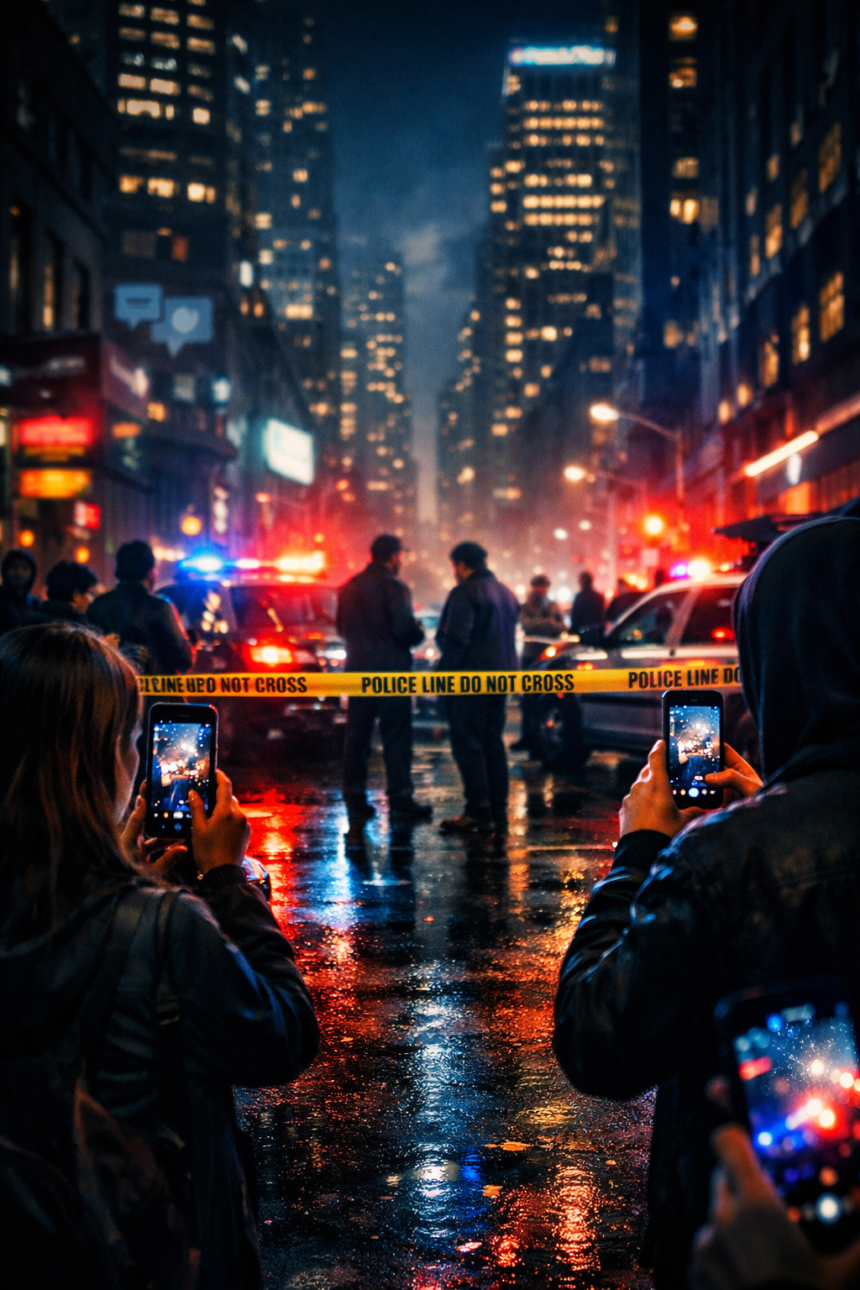
Local crime stories are no longer just the five-minute segment before weather. They’ve become a full-blown digital genre, feeding our group chats, lighting up our feeds, and changing how entire neighborhoods think about safety.
Why local crime stories suddenly feel everywhere
There was a time when local crime stories lived in a very specific lane. You caught them on the evening news, maybe saw a newspaper headline at a gas station, and moved on. Now? One shaky apartment-window video, one Ring clip, one citizen thread, and suddenly a neighborhood incident feels like national entertainment.
That shift matters.
Today’s local crime stories move with the speed of culture, not just the speed of journalism. They spread through clips, commentary, screenshots, stitched reactions, and late-night Reddit threads where everyone suddenly becomes half detective, half media critic. It is not only about what happened. It is about how the story travels.
A big reason for that is the messy ecosystem around where Americans get local crime news. People do not rely on one channel anymore. They bounce between local TV, neighborhood chatter, search, social platforms, and apps like Citizen. That mix makes crime coverage feel more immediate, more emotional, and sometimes way more dramatic than the original event.
And that is exactly why the genre sticks.
The feed turned local crime stories into bingeable content
From breaking news to scroll-stopping storytelling
The internet did not invent crime fascination. It just put it on turbo mode.
The modern version of local crime stories is built for the attention economy. You get the cliffhanger headline. Then the blurry clip. Then the witness quote. Then the neighborhood debate. Then the “wait, that happened three blocks from me?” moment. It has the rhythm of a thriller series, except it is unfolding in real time and often in places people actually know.
That emotional proximity is powerful. It turns passive audiences into active participants.
One TikTok user put it perfectly: “It’s wild how one Ring clip can turn a random street into the whole internet’s main character.”
That line sounds funny, but it also explains the whole phenomenon. A random event is no longer random once the algorithm decides it is interesting. Suddenly a burglary, a chase, a suspicious disappearance, or a corruption probe becomes a city-wide mood.
This is where how Americans respond to local crime news becomes especially relevant. People do not just consume these stories. They talk about them, forward them, argue over them, and fold them into their own sense of daily risk.
That reaction loop is one reason local crime stories feel so much bigger than the police blotter they came from.
The social media effect: everybody wants to be the one with the clue
Witness culture changed the tone of local crime stories
Social media did something traditional crime reporting never really could. It made audiences feel useful.
On TikTok, X, Reddit, and neighborhood platforms, users are not just reacting to local crime stories. They are enhancing them, reframing them, and sometimes trying to solve them. That could mean geolocating a storefront from a surveillance frame, spotting a car model in a grainy video, or connecting a case to an older post from the same area.
Sometimes that energy genuinely helps surface overlooked details. Other times it creates rumor spirals that move faster than facts.
That tension is part of why the format is so addictive. It gives everyday people a role. You are no longer just reading crime coverage. You are in the comments, in the thread, in the theory chain, in the map screenshot, in the “I think I saw this guy near the station” reply.
A Redditor summed it up in one line: “Local crime stories hit different because you can picture the exact block, the exact corner store, the exact walk home.”
That is the emotional engine. Familiar geography makes the story feel personal, even for people with no direct connection to the incident.
And when those stories overlap with city politics, public distrust, or sensational local scandals, the attention gets even stronger. BigTrending readers who follow pieces about local scandals gripping communities already know the pattern: once a story taps into local fear and local outrage at the same time, it spreads fast.
What the data says, and why the vibe online can feel bigger than reality
Viral attention and real-world crime are not always the same thing
One of the trickiest things about local crime stories is that online visibility does not always equal real-world scale.
The story with the wildest footage wins attention. The case with the most cinematic details wins discourse. The incident with the eeriest backstory gets turned into content. But those are not always the best indicators of broader city safety.
That is why it helps to keep one eye on Criminal Victimization, 2024 and other official reporting. Not because data kills storytelling, but because data keeps storytelling from becoming pure panic.
This is a huge cultural point. The internet rewards intensity. It does not reward proportion.
So one dramatic robbery clip can dominate a city’s mood for days, while long-term patterns that matter more receive a fraction of the attention. That mismatch changes how people interpret what it means to live in an urban area. It can make some neighborhoods feel permanently on edge even when the fuller picture is more complicated.
In other words, local crime stories do not just report fear. Sometimes they manufacture the shape of it.
The rise of the digital detective
Why people love solving mysteries from their phones
There is something almost irresistible about unsolved tension.
Missing-person cases. odd timelines. suspicious exits. surveillance footage with one unexplained detail. The audience sees a gap, and the brain wants closure. That is the same reason so many people fall down rabbit holes around the true-crime obsession. Mystery invites participation.
And in the era of digital sleuthing, participation is everything.
The digital detective is part hobbyist, part anxious citizen, part content consumer, part volunteer researcher. They search public posts, compare screenshots, archive deleted clips, and trade theories across platforms. Sometimes they bring useful visibility to overlooked cases. Sometimes they turn tragedy into interactive entertainment without meaning to.
That contradiction is worth sitting with.
A lot of people engaging with local crime stories are not trying to sensationalize harm. They are trying to make sense of chaos. They want the story to close. They want the timeline to click. They want the city to feel legible again.
An X user captured the mood well: “Every city now has one crime thread that feels bigger than the actual police report.”
Exactly. The thread becomes the event. The discourse becomes the experience. The crowd becomes part of the narrative architecture.
What local crime stories do to city life
Vigilance, anxiety, and the neighborhood safety loop
When local crime stories go viral, they rarely stay confined to entertainment. They change behavior.
People check doorbell cameras more. They share neighborhood alerts more aggressively. They rethink late-night routes, parking habits, transit choices, and even where they let kids play. In some cases, this leads to practical preparedness. In others, it creates a low-grade ambient stress that never quite switches off.
That is where the ripple effect becomes real.
One major side effect of high-visibility crime coverage is that it can reignite neighborhood organizing. Communities start talking more, sharing updates more, and looking for ways to feel less passive. Sometimes that leads to better communication, stronger watch habits, and more attention to local infrastructure. Sometimes it leads to paranoia, profiling, or rumor-heavy chat groups that make everybody more tense.
The healthier version of that civic response looks a lot like community response to local crises: organized, neighbor-focused, practical, and rooted in real support instead of pure panic.
That is a useful distinction.
The best response to local crime stories is not endless doomscrolling. It is informed awareness plus grounded action.
Why we cannot stop watching
The dark magnetism of proximity
Let’s be honest. Part of the pull is emotional. Part of it is cultural. And part of it is deeply human.
We are drawn to danger when it is close enough to feel real but distant enough to feel survivable from behind a screen. That is why local crime stories hit differently from broad national crime coverage. They come with local streets, local accents, local landmarks, and recognizable routines. They feel like they belong to the same world as your grocery run, your commute, your apartment building, your city.
That nearness creates a very specific kind of suspense.
It also creates identity. Cities start narrating themselves through the stories they repeat most. Some places become known for corruption scandals. Others for flashy theft rings. Others for eerie disappearances that linger online long after official attention fades. Media, residents, and social platforms all help shape that image.
And once a city gets one big viral crime moment, the audience starts expecting more. That expectation keeps where crime news spreads fastest at the center of the conversation, especially when real-time crime apps and social feeds are already feeding the cycle.
This is no longer just news behavior. It is culture behavior.
How to consume local crime stories without getting swallowed by them
There is a smart way to engage with local crime stories, and it starts with not letting the most dramatic clip become your entire worldview.
A few practical rules help:
- Check whether the story is being reported consistently across more than one credible source.
- Separate what is confirmed from what is just socially repeated.
- Notice whether the viral angle is a public-safety issue or simply a sensational one.
- Pay attention to patterns, not just standout incidents.
- Use official context when possible instead of relying only on comment sections.
That does not make the stories less compelling. It just keeps you from mistaking algorithmic intensity for full reality.
Because the truth is, local crime stories are probably not leaving the cultural spotlight anytime soon. They sit at the intersection of fear, curiosity, local identity, and digital performance. That is a powerful mix. Too powerful, honestly, to stay niche.
The bottom line on local crime stories
The reason local crime stories are trending across U.S. cities is not just that crime happens. It is that the internet now turns every incident into a possible narrative event.
A robbery can become content. A disappearance can become collective obsession. A rumor can become a neighborhood mood. A thread can become a city’s unofficial story of itself.
That does not mean people are wrong to care. It means the way we care has changed.
We no longer just hear about crime. We experience it through feeds, clips, theories, reactions, reposts, and digital crowds that make every detail feel bigger, closer, and harder to ignore.
And that, for better or worse, is the new urban pulse.
FAQ
Why are local crime stories so popular online?
Local crime stories are popular because they combine suspense, proximity, and real-world stakes. People are naturally drawn to stories that feel close to home and easy to discuss with others.
Are local crime stories making people more afraid?
Sometimes yes. Local crime stories can increase vigilance, but they can also amplify anxiety when the most dramatic incidents dominate feeds and make isolated events feel constant.
Do social platforms change how local crime stories spread?
Absolutely. Social platforms turn local crime stories into shareable, emotional, fast-moving content. A single clip or witness post can push a neighborhood incident into city-wide attention within hours.
Can digital sleuths actually help with local crime stories?
They can help bring attention, organize public tips, and keep cases visible. But local crime stories can also be distorted when online speculation outruns confirmed facts.
What is the healthiest way to follow local crime stories?
The healthiest way to follow local crime stories is to stay informed without letting every viral clip define your perception of safety. Look for credible reporting, context, and official updates before drawing conclusions.