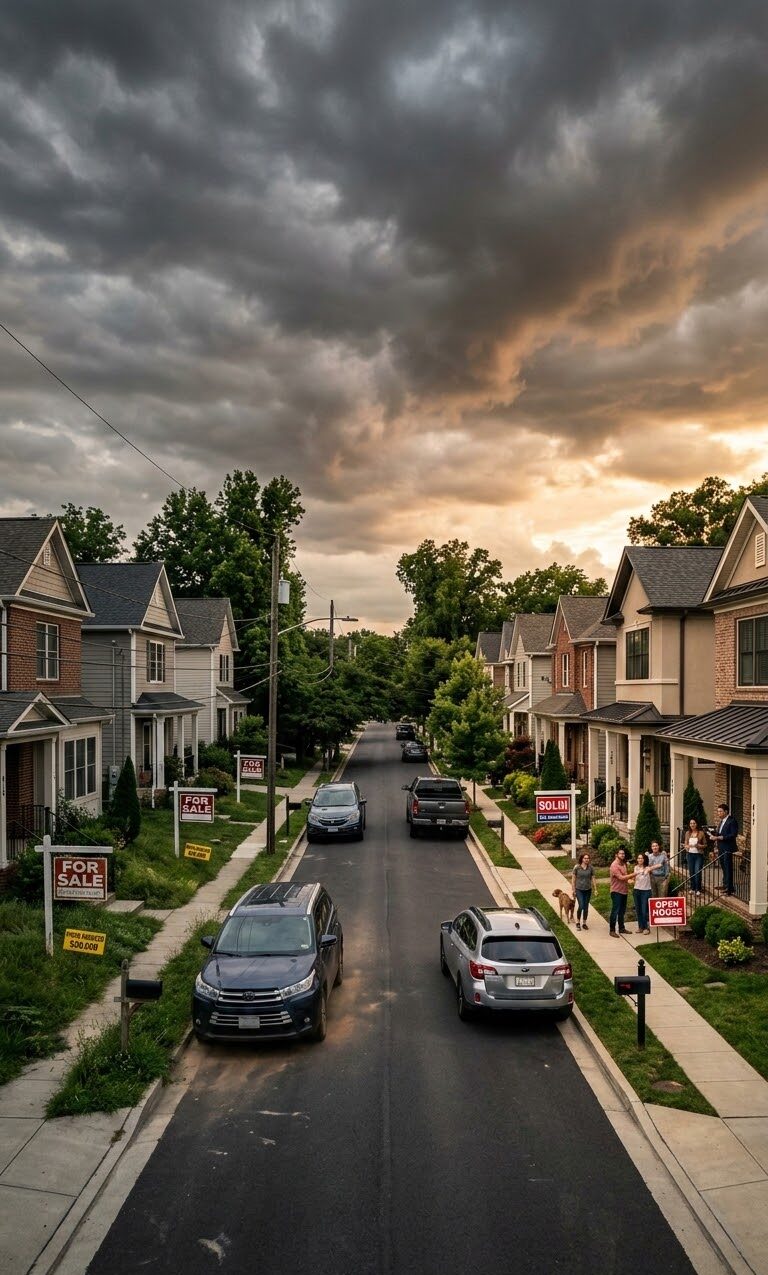
America’s housing story is no longer one clean headline. It’s a patchwork of buyer wins, seller stubbornness, and a whole lot of confusion depending on the ZIP code.
If the housing market feels like it’s speaking out of both sides of its mouth right now, that’s because it kind of is. In one metro, sellers are cutting prices and waiting nervously for offers. In another, buyers are still getting steamrolled by tight inventory and homes that vanish almost as soon as they hit the market.
That’s the real story behind local housing markets in 2026. National headlines keep trying to flatten everything into one neat takeaway, but the ground truth is messier. Some places are loosening up. Some are still painfully competitive. And for regular people trying to decide whether to buy, sell, move, or just keep refreshing Zillow in emotional distress, that mixed signal matters a lot.
Why local housing markets feel so confusing right now
The biggest mistake people make is assuming the U.S. housing market behaves like a single machine. It doesn’t. It behaves more like a hundred little dramas happening at once.
Mortgage rates still shape behavior everywhere, sure. But once you zoom in, local inventory, wages, migration, job growth, insurance costs, and even vibe-based desirability start pulling markets in different directions. That’s why one city can feel like a buyer’s playground while another still acts like 2021 never ended.
A lot of this split shows up in the gap between supply and demand. Nationally, there are clear signs of a cooler, more negotiable environment in many areas. That lines up with Realtor.com’s 2026 national housing forecast, which points to a more balanced market overall, with conditions tilting a bit more in buyers’ favor. Sounds nice in theory. In practice, that balance is wildly uneven.
A Redditor summed it up perfectly: “This market is weird. In one neighborhood homes sit, in the next one they vanish in a weekend.”
Exactly.
Where buyers suddenly have more breathing room
In some cities, buyers are finally seeing something that used to feel mythical: options.
More listings. More price cuts. More time to think before making a life-altering decision in 17 minutes. That shift is especially visible in metros where supply has improved and bidding frenzy has cooled. According to Zillow’s best markets for home buyers in 2026, places like Indianapolis, Atlanta, Charlotte, Jacksonville, and Oklahoma City are looking more buyer-friendly this year.
That does not mean they are cheap in some magical, stress-free way. It means leverage is changing.
Rising inventory is changing the mood
Buyers tend to feel bold when listings pile up. Sellers tend to feel humble when their home stops getting love after day three. That shift in psychology matters almost as much as the raw numbers.
When buyers see more inventory, they slow down. They compare. They negotiate. They ask for repairs again like it’s 2019. Suddenly the market mood changes from panic to caution.
That is one reason Redfin’s report on sellers outnumbering buyers landed so hard. It captured something buyers have been sensing in real time: in many places, sellers no longer control the room the way they used to.
TikTok user: “Every week my city looks more buyer-friendly, but the payment still feels brutal.”
That line nails the contradiction. More leverage does not automatically equal affordability.
More listings do not mean easy affordability
This is where many hopeful buyers get emotionally catfished by the market.
Yes, there may be more homes available. Yes, price reductions are showing up more often. But monthly costs still matter more than list price for most households. Mortgage rates, taxes, insurance, HOA fees, and the general cost of being alive in 2026 still hit hard.
So while some local housing markets are softening enough to help buyers negotiate, plenty of people still can’t comfortably enter the game. That is why the mood feels better than the math.
Where sellers still hold the power
Now for the other half of the story: not every market got the memo.
Some metros still have tight inventory, steady demand, and neighborhoods where desirable homes move quickly. This is especially true in places with strong local economies, high-income buyers, lifestyle appeal, or long-running supply constraints.
The result is a weird split-screen economy. In one city, buyers are circling stale listings like sharks. In another, sellers still expect clean offers and very little drama.
Tight pockets are refusing to cool
Even in broader markets that look more balanced on paper, certain neighborhoods are behaving like micro-hotspots. Walkable areas, top school districts, coastal enclaves, and move-in-ready homes still attract intense interest.
That is why “buyer’s market” can be technically true and emotionally misleading. It may be true at the metro level while feeling completely false in the exact neighborhood where someone wants to live.
This is also where migration patterns keep rewriting the map. The trend toward remote-work migration to smaller cities has not disappeared. It has simply matured. People are still making lifestyle-driven choices, and that keeps certain locations sticky even when the national mood cools.
Desirability is now hyper-local
One of the most important lessons in today’s local housing markets is that broad averages hide real opportunity and real risk.
A city can have more inventory overall while the best neighborhoods stay fiercely competitive. Sellers in those areas still hold leverage because demand has become more selective, not dead. Buyers are not spraying offers everywhere anymore. They are targeting the properties that feel safest, smartest, and most livable.
That means the gap between a great listing and an average one can be huge.
The forces driving these mixed signals
Behind every “Should I buy now?” panic spiral, there are a few core drivers doing most of the damage.
Mortgage rates are still running the show
Let’s not overcomplicate it. Rates still matter. A lot.
Even when prices stabilize, mortgage rates can keep monthly payments painfully high. That’s why people keep watching the market with one eye on listings and the other on their lender’s calculator.
When financing stays expensive, demand gets filtered. Buyers who remain active become pickier. Sellers who need to move become more flexible. But nobody really feels relaxed.
The supply gap still haunts everything
Another reason local housing markets feel contradictory is that America still hasn’t fully solved the housing shortage. Even where supply has improved, the long-term imbalance remains a major drag on affordability.
That is why the Reuters report on the widening U.S. housing supply gap matters. It reinforces a basic truth: some markets are getting easier to shop in, but the bigger supply problem has not magically vanished.
So yes, buyers may have more leverage in some places. No, that does not mean housing suddenly became easy.
Affordability pressure is changing behavior
People are adapting in real time. They are stretching farther out from city centers. They are buying smaller homes. They are delaying purchases. They are teaming up with partners or family. They are rethinking what “starter home” even means now.
For some households, keeping up with housing costs has become part of a broader survival strategy that looks a lot like the hustle culture behind these side hustles people use to keep up with rent. That pressure doesn’t just affect renters. It shapes buyer confidence too.
X user: “The housing market is no longer one market, it’s a patchwork of mini-dramas by ZIP code.”
Honestly, that may be the cleanest summary of the year.
What smart buyers and sellers should watch next
If you are trying to read local housing markets without getting lost in noise, focus on a few signals that actually matter.
Watch inventory, price cuts, and days on market
These three tell you a lot about leverage.
If inventory is rising, price cuts are increasing, and homes are lingering longer, buyers usually gain negotiating power. If listings stay scarce and homes move fast, sellers still have the upper hand.
Simple, but powerful.
Pay attention to local job growth and migration
This is where local really beats national. A metro with healthy hiring, steady in-migration, and attractive lifestyle perks can stay strong even while the broader housing conversation sounds gloomy.
That is also why lists like Zillow’s best markets for home buyers in 2026 matter less as ranking entertainment and more as clues about where conditions are changing first.
For buyers, the smart play is not asking, “Is it a buyer’s market in America?” It is asking, “What is happening in the exact neighborhoods I can actually afford?”
For sellers, the smart move is dropping the fantasy pricing if your local market has shifted. The days of automatic over-ask glory are not universal anymore.
The bigger cultural shift behind the market
Housing used to feel like a milestone. Now it feels like a strategy game mixed with therapy.
People are no longer choosing homes only based on commute and square footage. They are choosing around flexibility, burnout, climate anxiety, lifestyle goals, family logistics, and long-term financial survival. That makes today’s local housing markets more emotional than many analysts want to admit.
Homeownership now feels personal in a new way
Buying a home is still financial, obviously. But it is also become a referendum on identity.
Do you want more space or more convenience? A lower payment or more prestige? A suburb, a small city, a comeback downtown, a hybrid life? These choices are now deeply tied to how people imagine stability.
And because remote work and migration have changed the meaning of location, the cultural value of place is evolving too.
Value is being redefined
For some buyers, “value” means affordability and room to breathe. For others, it means staying in a market that still holds long-term demand. For sellers, value increasingly depends on realism.
That is the hidden story inside local housing markets right now. Not just whether prices are up or down, but how Americans are redefining what a good housing decision even looks like.
FAQ: Local housing markets explained
What does “local housing markets” mean?
Local housing markets refers to housing conditions in specific cities, metros, or neighborhoods rather than the U.S. market as a whole. That matters because local supply, demand, and affordability can vary dramatically.
Why are local housing markets sending mixed signals?
Because some local housing markets have rising inventory and more buyer leverage, while others still have tight supply and seller-friendly conditions. Rates, migration, and local job strength all shape those differences.
Are local housing markets better for buyers in 2026?
Some local housing markets are clearly better for buyers than they were a year ago, especially where listings are up and price cuts are more common. But affordability is still a major obstacle in many places.
How do mortgage rates affect local housing markets?
Mortgage rates directly affect monthly payment power, which changes buyer demand. In local housing markets where rates hit affordability hard, sellers may need to adjust pricing or expectations.
Should sellers be worried about local housing markets cooling?
It depends on the area. In some local housing markets, sellers still hold strong leverage. In others, buyers are gaining negotiating power, so pricing and presentation matter more than ever.
The bottom line is simple: the housing market is not one story anymore. It is local, emotional, uneven, and deeply tied to how people want to live now. That makes it harder to summarize, sure, but it also makes it more important to read the room before making your move.