


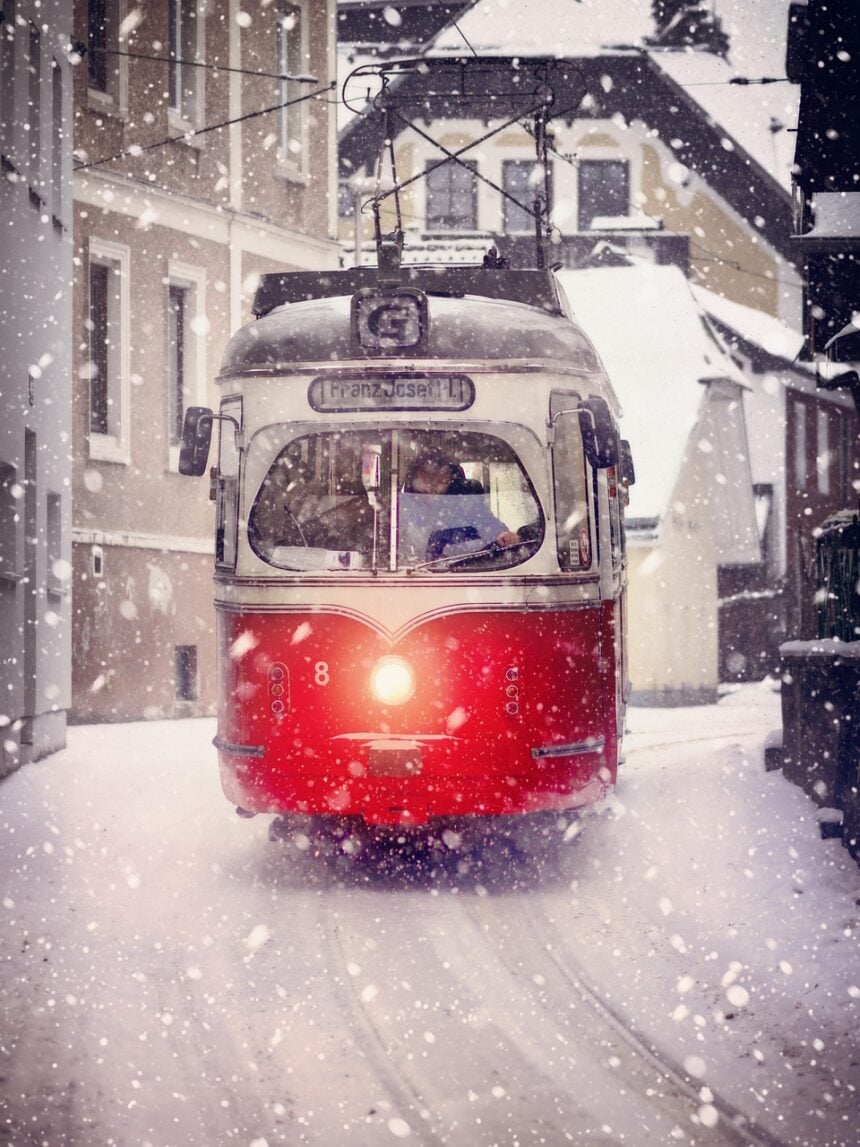
Public transportation didn’t suddenly get “worse”, it just stopped being able to hide its weak points. And now riders are calling it out loudly, daily, and everywhere.
Why Public Transportation Is Getting Dragged Right Now 🚍
If you’ve ridden a bus or train in a major US city lately, you know the mood: leave early, arrive stressed, and feel oddly grateful when the basics happen. That’s not “entitled commuter energy”. That’s what it feels like when a system is running on thin margins, where one breakdown turns into a whole-city chain reaction.
What changed isn’t just infrastructure. It’s expectations.
We live in an era where people can track a pizza in real time, but a train can vanish into the ether with the energy of “good luck out there.” Riders aren’t less patient. They’re just done paying a daily time tax for something that’s supposed to be reliable, safe, and predictable.
Yes, there’s money on the table. But money doesn’t instantly translate into a better Tuesday morning commute. The gap between funding headlines and street-level improvements is where public trust goes to die. That’s why reading about Transit funding under the Infrastructure Investment and Jobs Act can feel both hopeful and maddening in the same breath.
The Daily Struggles of Commuters (and why it feels personal) 🚦
Public transportation is one of the few services that can ruin your day before you’ve even had coffee. It’s not just late. It’s late in a way that makes you question your job security, your childcare pickup time, and your entire life plan.
When riders say “transit is broken,” they usually mean:
- Uncertainty: you can’t plan around randomness.
- Compounding delays: one hiccup becomes a domino chain.
- Emotional fatigue: the daily “will it show up?” stress adds up.
A TikTok user nailed it: “My bus app says ‘arriving’ for 12 minutes straight. It’s basically emotional damage.”
A Redditor: “Public transit would be amazing if it showed up like it has bills to pay.”
An X user: “Nothing builds character like sprinting for a train that’s already delayed.”
It’s funny because it’s true… and that’s the problem.
The Big Three Pain Points Riders Keep Naming (and they’re not wrong) 😤
Aging infrastructure that fails in public
A lot of US transit systems were built in a different era, for a different city, with different ridership patterns. Some networks are running on decades-old equipment, deferred maintenance, and “temporary fixes” that became permanent roommates.
This is where the unsexy phrase state of good repair backlog matters. Because when agencies fall behind on keeping vehicles, stations, signals, tracks, elevators, and power systems in healthy condition, the system doesn’t just get inconvenient. It becomes fragile.
Real-world example: one signal issue slows trains. Slow trains cause platform crowding. Crowding increases dwell time at stations. Dwell time slows service even more. Now it’s not a delay, it’s a mini meltdown.
Practical takeaway: the “small” failures are rarely small. They’re stress tests that the system keeps failing in public.
Reliability gaps that turn commutes into roulette
Frequency is a cheat code for reliability. If your bus comes every 6 minutes, a delay is annoying. If it comes every 25 minutes, a delay is a life event.
Many agencies tried to cut costs by reducing frequency. That can look “efficient” on a spreadsheet, but riders experience it as: “the service is unreliable, so I can’t build my life around it.”
Then the spiral starts:
- service gets worse
- ridership drops
- revenue drops
- political support weakens
- service gets worse again
Pro tip: if you want to know whether public transportation is thriving, don’t ask how shiny the stations are. Ask how often vehicles actually show up on time during normal weekday life.
Investment gaps that feel like “patchwork forever”
People can handle upgrades taking time. What they can’t handle is the feeling that nothing ever improves.
A station can be “under renovation” for so long it develops its own lore. A rail line can run with “temporary slow zones” for years. When riders see money flowing into big projects while their daily commute stays chaotic, it breaks trust.
That’s why infrastructure funding matters most when it produces boring, visible wins: fewer breakdowns, cleaner stations, better staffing, and schedules that don’t feel like fiction.
The Ridership Comeback Is Real… but It’s Conditional 📈
Let’s kill one myth: people didn’t “stop liking public transportation.” Many stopped trusting it.
Ridership is recovering in many places, but it’s uneven. It depends on work patterns, safety perceptions, service frequency, and whether a system feels predictable day to day. That’s why reading a public transportation ridership update is less about the headline and more about what it implies: reliability and frequency are the product.
Frequency and reliability decide everything
You can’t rebrand your way out of operational problems.
You can run ads. You can rename lines. You can launch a new app. If buses still ghost people, riders won’t come back long-term.
Mini case study (the realistic kind):
A city boosts frequency on two key corridors, adds bus-priority lanes at the worst chokepoints, and improves dispatch so delays don’t snowball. Suddenly, riders start describing the service as “usable.” That word “usable” is the whole game.
The trust tax (once riders leave, it’s hard to win them back)
When someone buys a car because transit became unreliable, it’s not a casual switch. It’s a monthly payment, insurance, parking, and a new default habit. Transit has to become consistently better long enough that people feel safe switching back.
This is why the next era of public transportation success won’t be built on one-time projects. It’ll be built on sustained operational discipline and service that feels dependable every single day.
The Cities Under Pressure: NYC, Bay Area, DC (and why it keeps repeating) 🚇
The big-name systems catch the most heat because they carry massive daily demand and have complex legacy infrastructure that can’t easily “pause” for repairs.
Legacy systems = legacy problems
New York, the Bay Area, DC… these aren’t just transit networks. They’re historic machines that run constantly. You can’t close them down the way you can with a road. The city still has to move.
So agencies patch, defer, and prioritize emergencies. The system stays alive, but it runs hot. Riders feel that heat as delays, inconsistencies, and “why is this still happening?” fatigue.
Deferred maintenance charges interest (and riders pay)
Deferred maintenance is like skipping dentist appointments. It feels fine until it absolutely does not.
- breakdowns become more frequent
- incidents become more disruptive
- fixes become more expensive
- riders become more likely to bail
That’s why “modernization” isn’t just about cool tech. It’s about restoring basic reliability and resilience.
Bright Spots That Actually Matter (not PR fluff) 🌱
You called out the right themes: greener fleets, smarter tech, and real investment. But none of it works unless it’s paired with operations that don’t crumble under stress.
Electric fleets and modern vehicles (why it’s harder than it sounds)
Electric buses are a big step, but they aren’t plug-and-play. Agencies need charging infrastructure, route planning that matches range realities, maintenance training, and procurement that doesn’t turn into a multi-year drama.
When cities get it right, the benefits are huge: quieter streets, cleaner air, and a modern feel that makes riding public transportation more appealing.
Real-time tech: the bare minimum that feels like magic
Riders don’t need futuristic gimmicks. They need honest information.
- if the bus is delayed, say it
- if it’s cancelled, say it
- if it’s coming in 2 minutes, it better not be 12
When real-time data becomes accurate, people stop guessing and the commute stops feeling like gambling.
Make it safe, make it clean, make it predictable
Safety and cleanliness aren’t “nice extras.” They’re part of the product.
If riders feel unsafe, they won’t ride. If stations feel chaotic, they won’t linger. If service feels unpredictable, they’ll choose anything else, even if it costs more.
This is where simple consistency beats flashy announcements.
What the US Can Steal From Tokyo and Zurich (respectfully) 🌍
When people bring up Tokyo or Zurich, they’re not saying “copy-paste the entire system.” They’re pointing to two principles the US often struggles to execute consistently.
Consistency beats big announcements
The best systems don’t rely on occasional mega-projects to be good. They rely on daily competence: reliable scheduling, tight operations, clear communication, and nonstop maintenance.
Service culture is operational discipline
This part isn’t glamorous, but it’s everything. In high-performing systems, transit is treated like a core civic service with a standard that must be met, not a budget line that can be trimmed whenever politics get weird.
The BigTrending angle: Cities are rewriting their “systems stack” 🧠
Here’s the bigger trend hiding underneath the transit discourse: cities are being forced to rethink how everything works together.
Public transportation doesn’t exist alone. It’s tied to housing, work patterns, healthcare access, and how people move through daily life. You can’t fix transit without understanding what the city is becoming.
For example, why everyone’s moving to smaller cities isn’t just a lifestyle storyline. It’s also an infrastructure storyline. Smaller cities are under pressure to scale services fast, while big cities are battling the complexity of legacy networks and intense demand.
And there’s a new “public services meet public space” wave too. The fact that telehealth kiosks are popping up in transit hubs signals something bigger: cities are using stations as access points for more than transportation: healthcare, services, and everyday needs.
If you want a simple baseline for why transit feels wildly different city to city, it helps to understand public transportation in the United States. It’s a patchwork of agencies, funding models, and political realities, which makes “just fix it” easier to tweet than to execute.
The Roadmap: What would make public transportation feel “normal” again ✅
Fixing transit isn’t mysterious. It’s just hard. Here’s what moves the needle in a way riders actually feel.
Dedicated funding streams (stable beats sporadic)
One-time injections help, but they don’t solve operating costs. If agencies can’t fund frequency, staffing, and maintenance year after year, service will keep wobbling.
The smartest cities create funding that doesn’t evaporate when leadership changes.
Operations-first mindset (maintenance, staffing, scheduling)
Before flashy expansion, the system needs to run well today.
- preventive maintenance that reduces breakdowns
- staffing that prevents cascading delays
- scheduling that matches reality (not wishful thinking)
If your city wants to “boost ridership,” ask the most boring question first: How often does the service actually show up on time? That’s the foundation.
Rider-first design (safety, accessibility, clarity)
Riders shouldn’t need a transit PhD.
- wayfinding should be obvious
- stations should feel safe and well-lit
- transfers should be painless
- updates should be clear and fast
When public transportation is designed for real humans, it becomes the default, not the backup plan.
FAQ
Why is public transportation under fire in US cities?
Public transportation is under fire because riders deal with unreliable service, aging infrastructure, safety concerns, and slow-to-arrive improvements that don’t match daily reality.
Is public transportation getting better or worse right now?
It’s mixed. Some places are improving, but the biggest driver is reliability. If public transportation feels predictable and frequent, people come back.
What would fix public transportation fastest?
The fastest wins are more frequent service, better maintenance to reduce breakdowns, accurate real-time information, and visible safety and cleanliness improvements.
Which US cities struggle most with public transportation?
Legacy-heavy systems face constant pressure. Cities like New York, parts of the Bay Area, and Washington DC often deal with aging assets and complex operations.
How can riders push for better public transportation?
Support funding that covers operations (not only construction), show up to local transit meetings, report reliability issues consistently, and advocate for frequency and safety as top priorities.


