Smart homes used to feel like a flex. Now they feel like a setting you forgot to turn on. The biggest shift is not the gadgets, it’s how frictionless smart living has become for normal budgets.
Smart Homes Are No Longer a Luxury
Smart homes went mainstream for the same reason smartphones did 📲
If you remember the early smartphone era, you remember the vibe: cool, expensive, slightly confusing, and mostly owned by people who loved to tell you about it.
Smart homes had the same arc. At first, “smart home” meant custom installs, awkward apps, and a feeling that one wrong tap would turn your living room into a disco at 2 a.m. Now it’s the opposite. Most smart setups are closer to plug-and-play than “hire an engineer.”
What changed? Three big things:
- Devices got cheaper (and way less intimidating).
- Wi-Fi and mobile apps matured (so control feels natural).
- Compatibility improved (so brands can actually talk to each other).
And once smart homes crossed the line into “easy,” they became inevitable.
The “it just works” moment finally arrived
The average person doesn’t want a smart home. They want a home that’s less annoying.
That’s why standards matter. If you’ve ever bought a “smart” product that only works in one ecosystem, you know the pain: it’s smart until you try to use it.
This is where what the Matter smart home standard is becomes a real turning point. Matter is basically the peace treaty that helps devices play nicer across platforms. For regular people, that translates to fewer setup headaches and fewer “Why won’t you connect?” meltdowns.
A TikTok user reaction that sums up the vibe perfectly: “I don’t want to be tech support for my own house.”
Exactly.
Smart tech got cheaper, simpler, and more plug-and-play
Price drops did a lot, but simplicity did more. You can now start small and still feel the benefit immediately.
The key is understanding what smart homes really are. It’s not one product. It’s a system of small upgrades that add up to a smoother life. If you want the clean definition, home automation explained in plain English is the baseline: lighting, climate, security, appliances, routines, and control.
And here’s the best part: you do not need to do everything. Smart homes work best when they solve specific friction points.
If you hate fumbling for light switches, start with lighting.
If you worry about packages, start with a camera.
If your bills are wild, start with a thermostat.
Build your smart home like you build a wardrobe: start with staples, not costumes.
The starter stack that makes a home feel smart (without going broke) 💡
The biggest myth about smart homes is that you need a full renovation and a big budget. You don’t.
Most people get 80 percent of the “wow” with a few strategic devices, set up in the right order.
Here’s a clean starter stack that actually makes a difference.
Smart speakers: the easiest “hub” in the house
Smart speakers got popular for one reason: they turn tech into conversation.
Even if you never say a command out loud, a speaker often becomes the bridge between devices, routines, and quick control. It’s also the easiest way to test whether you like smart living at all.
Use cases that feel instantly worth it:
- turning lights on and off hands-free
- playing music and podcasts while cooking
- setting timers and reminders that you actually hear
- controlling multiple devices with one phrase
A Redditor put it in a way that feels too real: “My house knows my morning routine better than I do.”
Smart speakers are usually where that begins.
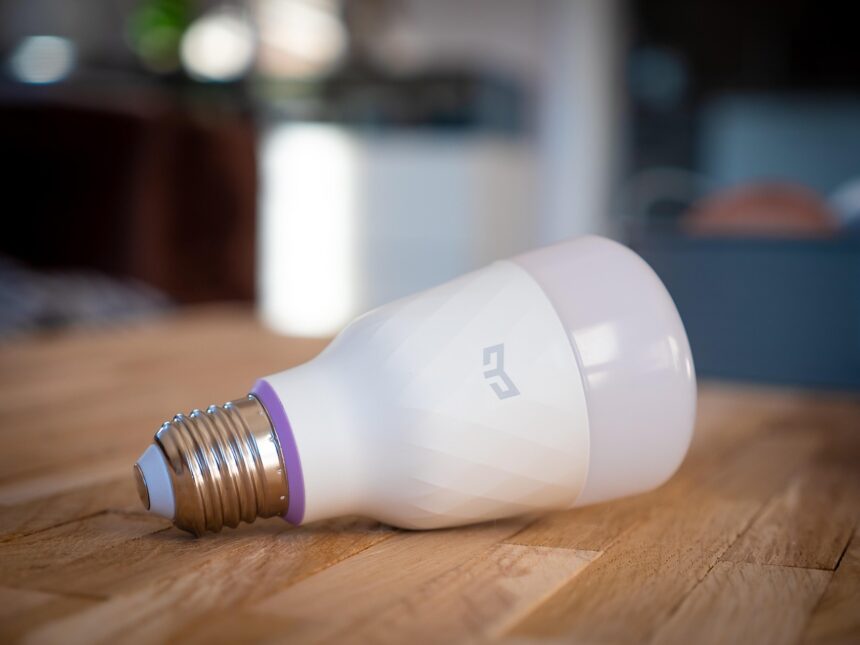
Smart lighting: the fastest upgrade for mood and convenience
Lighting is the cheat code of smart homes. It’s immediate, visible, and surprisingly emotional.
Smart lighting can:
- automate wake-up and wind-down routines
- simulate occupancy when you’re away
- set different scenes for work, relax, movie night
- reduce that “did I leave the lights on?” anxiety
Pro tip: Start with one room you use daily, like the living room or bedroom. If you spread bulbs across the whole house on day one, you’ll spend your weekend pairing devices instead of enjoying them.
Energy-efficient thermostats: comfort plus real savings
Thermostats are one of the few smart devices that can pay you back over time. The value is not “my home is futuristic.” The value is “my home is comfortable without wasting money.”
A smart thermostat is worth it if:
- your schedule is consistent enough to learn patterns
- you travel or leave home often
- your home has temperature swings you constantly fight
And even if you don’t want “learning,” basic scheduling alone can reduce wasted heating and cooling.
Smart security: peace of mind on demand 🔒
Security is where smart homes stopped being a novelty and became a practical upgrade.
For many households, the first smart security purchase is not a full system. It’s one device that solves one worry:
- a doorbell camera for deliveries
- a camera for the front door or garage
- a smart lock if you share access with family or renters
An X user summed up the emotional payoff: “Seeing my doorbell camera from miles away is the best peace of mind upgrade.”
That’s the smart home value: less uncertainty.
A realistic buying strategy: build the stack in this order
If you want your smart homes setup to feel smooth, not chaotic, follow this sequence:
- Control layer first: speaker or app ecosystem
- Lighting next: one room, one routine
- Security after: one camera or doorbell
- Comfort upgrades: thermostat or air quality
- Nice-to-haves: blinds, plugs, sensors, advanced scenes
This order avoids the classic mistake: buying five devices that do not cooperate, then quitting.
If you want a quick list of affordable devices that fit this “start small” mindset, 15 cheap smart home devices worth it is a solid reference because it focuses on practical wins, not luxury fantasies.
Building routines that actually save time (not just look cool)
A smart home is not impressive because the lights change colors. It’s impressive when it removes tiny daily annoyances.
The best routines are boring in the best way. They run quietly and make life smoother without demanding attention.
Examples that feel instantly useful:
- “Good morning” routine: lights up slowly, news brief, coffee plug turns on
- “Work mode” routine: bright lights, do-not-disturb, calming playlist
- “Leaving home” routine: lights off, thermostat adjusts, security arms
- “Movie night” routine: dim lights, TV turns on, soundbar sets volume
The secret is consistency. Your routines should mirror your habits, not your Pinterest board.
If you like the “small upgrades, big impact” mindset, tiny habit upgrades that feel like magic is a great way to think about smart homes: you’re not building a spaceship, you’re building flow.
A TikTok user joke that hits too hard: “I told my smart speaker to play my hype song and now I’m unstoppable.”
That’s the vibe. Smart homes don’t just save time. They shape mood.
Security and privacy: the part everyone forgets until it’s too late 🔐
Let’s get serious for a second.
Smart homes are only “smart” if you keep them safe. Otherwise, you’re just adding connected devices that can become weak points.
The good news: most smart home security issues come from basic mistakes. And most of those mistakes are easy to fix.
Simple rules that prevent most smart home problems
Start with these fundamentals:
- Use unique passwords for your smart home accounts
- Turn on multi-factor authentication when available
- Update firmware and apps regularly
- Separate your home network if you can (guest network for IoT devices)
- Only buy devices from reputable brands with ongoing support
If you want the most credible baseline for what “safe consumer IoT” looks like, NIST consumer IoT cybersecurity guidance is a strong reference point.
Pro tip: If your router is ancient, upgrade it before you add a dozen connected devices. A smart home built on a weak router is like installing a fancy lock on a cardboard door.
Why the smart home market is exploding right now 📈
People love to say smart homes are booming because of “technology.” That’s not the full story.
Smart homes are booming because convenience is addictive.
Once you experience:
- lights that adapt to your day
- a thermostat that stops wasting money
- security you can check instantly
- routines that reduce friction
It becomes hard to go back.
Convenience is the product, energy savings is the bonus
The emotional driver is convenience. The rational driver is savings.
Energy-efficient devices, scheduling, and automation can reduce waste without you thinking about it. That’s a rare win: comfort plus optimization.
If you want a market-level view that supports the idea that smart homes are scaling fast, smart home market growth projections helps frame why this shift is not a niche trend. It’s becoming standard consumer behavior, especially as devices get cheaper and more interoperable.
And this is where the “no longer luxury” argument becomes obvious: when a category becomes normal, it stops feeling optional.
The next phase: AI-first homes that anticipate you (carefully) 🤖
The most interesting future for smart homes is not more devices. It’s smarter coordination.
Today, you tell your home what to do. Tomorrow, your home will suggest what to do.
That sounds amazing, and also a little terrifying, depending on how it’s implemented.
From voice control to “predictive routines”
The next wave is about prediction:
- the home notices you always lower the lights at 9:30
- it learns that you like cooler temps when you sleep
- it recognizes that you leave at similar times on weekdays
- it adapts without you manually setting rules
This is where AI enters the conversation beyond “voice assistant.” We’re moving into assistants that can coordinate systems, not just respond.
If you’re curious about building a more personalized setup, build your own DIY AI assistant is a useful internal angle because it connects the smart home story to a broader trend: everyday AI becoming normal, and customizable, in daily life.
Reality check: The best AI home is the one that gives you control. Predictive routines should be optional, reversible, and transparent. Convenience should not come with mystery.
Embracing the smart home lifestyle without going full robot house
If you take one thing from this: smart homes are not about showing off. They’re about reducing friction.
Start with one pain point. Solve it. Then expand.
A smart home is successful when:
- it saves time without creating new chores
- it feels calmer, not more complicated
- it makes you feel safer, not watched
- it adapts to your life instead of forcing new habits
Smart homes are no longer a luxury because they finally stopped acting like luxury. They started acting like infrastructure.
And once infrastructure gets easy and affordable, it becomes the default.
FAQ: Your smart homes questions answered 🤔
What are smart homes, exactly?
Smart homes are homes where connected devices automate or improve everyday tasks, like lighting, climate, security, and routines. Smart homes often use apps or assistants to control multiple systems.
Are smart homes expensive to set up?
Smart homes do not have to be expensive. You can start with one smart bulb or plug and build gradually. Most smart homes become affordable when you focus on a few high-impact upgrades first.
Do smart homes actually save energy?
Yes, smart homes can improve energy efficiency through scheduling, automation, and smart thermostats that reduce waste. Smart lighting and motion-based routines also help cut unnecessary usage.
How safe are smart homes from hacking?
Smart homes can be safe if you use strong passwords, enable multi-factor authentication, keep devices updated, and follow reputable security guidance. Basic hygiene prevents most problems.
What is the best first device for smart homes?
For most people, the best first device for smart homes is smart lighting or a smart speaker, because it delivers immediate convenience and helps you test whether you enjoy automation.